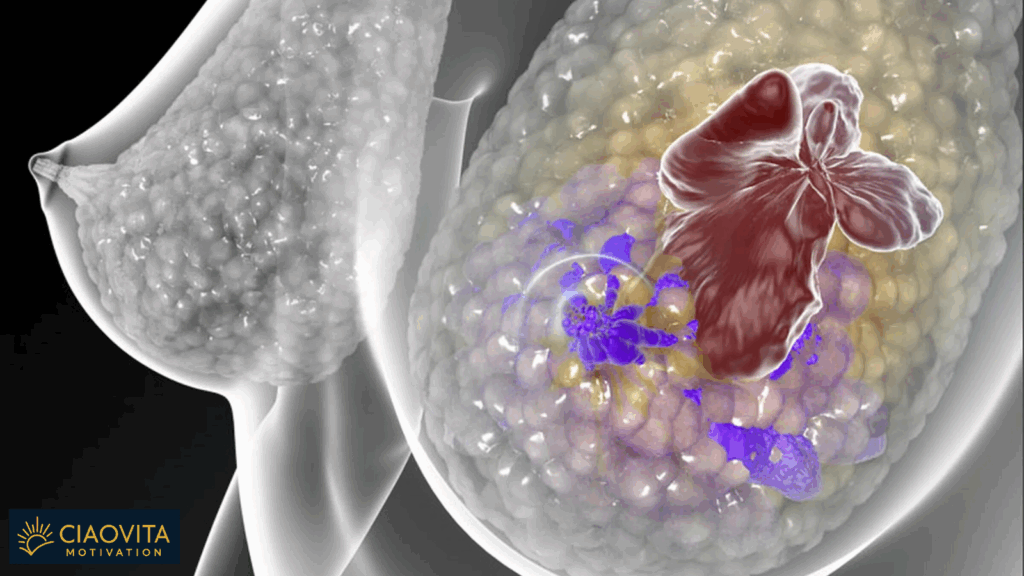
Chemo Brain: How Breast Cancer Treatment Affects Your Mind
Brain Fog and Cognitive Impairment After Breast Cancer Treatment
Breast cancer treatment saves lives. Modern chemotherapy and hormone therapy have dramatically improved survival rates over the past two decades. Yet these powerful treatments carry a side effect that most patients never fully understand: the quiet, persistent reshaping of how the brain works.
Doctors call it cancer-related cognitive impairment. Patients call it chemo brain. Others simply describe it as brain fog. Whatever name you use, the effect is real, and it affects a startling number of survivors. A 2022 meta-analysis found that roughly 1 in 3 women treated for breast cancer develop clinically significant cognitive impairment.
This article breaks down the science behind chemo brain. We explain how it develops, what the latest research says, and — most importantly — what evidence-based strategies actually help. If you or someone you love is going through breast cancer treatment, this article was written for you.
What Is Chemo Brain? Understanding the Real Problem
Chemo brain is not a medical mystery. It is a well-documented condition with a clinical name: cancer-related cognitive impairment or CRCI. Researchers have studied this condition for over two decades. And the evidence is now overwhelming.
A landmark 2022 meta-analysis by Whittaker et al., published in Scientific Reports, reviewed 52 unique studies. Their conclusion was clear: approximately 1 in 3 breast cancer survivors experience clinically significant cognitive impairment after treatment.
The symptoms vary from person to person. But they follow a recognizable pattern:
1. Memory lapses — Forgetting recent events, appointments, or familiar words.
2. Difficulty concentrating — Struggling to focus on a single task for more than a few minutes.
3. Slowed processing speed — Taking longer than usual to think through problems or respond in conversation.
4. Brain fog — A persistent mental haziness that does not clear with rest or sleep.
5. Difficulty with multitasking — An inability to manage two or more tasks at the same time.
6. Word-finding problems — Knowing what you want to say but being unable to find the right word.
One of the most striking findings involves the gap between how patients experience these symptoms and how they appear on standard tests. An umbrella review by Oliva et al. (2024), published in The Oncologist, highlighted that 44% of patients self-report cognitive difficulties, while only 16–34% show impairment on neuropsychological assessments. This gap matters. It means many patients suffer in silence without receiving a diagnosis or treatment plan.
Inside the Brain: How Chemotherapy Triggers Cognitive Damage
To understand why chemo brain happens, you need to understand one critical fact about chemotherapy drugs: many of them cross the blood-brain barrier. This barrier normally protects the brain from toxic substances. When chemotherapy penetrates it, the consequences can be significant.
The primary mechanism is neuroinflammation, an immune response inside the brain that, under normal circumstances, helps fight infection. Chemotherapy can trigger this response inappropriately. The brain’s immune cells become overactive. They release inflammatory chemicals that damage the very neurons they are supposed to protect.
The damage does not stop at inflammation alone. Chemotherapy also increases oxidative stress, a process in which unstable molecules attack healthy cells. This disrupts the mitochondria, the cell’s energy generators. The result is reduced cellular energy in brain tissue. Neurons fire less efficiently. Communication between brain regions slows.
Specific inflammatory molecules called cytokines, particularly IL-6 and TNF-alpha, play a central role. These chemicals are released by the immune system during and after chemotherapy. Research links elevated cytokine levels directly to memory difficulties and slowed thinking speed in breast cancer survivors.
Understanding these mechanisms is not just academic. It points directly toward which treatments and interventions can make a real difference. The science of brain recovery depends on targeting these specific pathways. To learn more about how brain health connects to daily habits, read about the connection between lifestyle and brain health.
🔬 KEY BIOMARKER DISCOVERY:
A 2021 PET-MRI study by Schroyen et al., published in Cancers, found that neurofilament light chain (NfL) — a marker of nerve cell damage — was detected at levels 20× higher in women who had undergone chemotherapy compared to healthy controls. This finding opens the door to objective, blood-based screening for chemo brain.
Hormone Therapy and the Brain: A Longer Shadow Than Expected
Many women assume that cognitive effects from cancer treatment end when chemotherapy stops. For those who take hormone therapy afterward, this assumption is incorrect. Breast cancer treatment often continues for 5 to 10 years with medications like tamoxifen or aromatase inhibitors. These drugs do not just target cancer cells — they also dramatically reduce estrogen levels in the body.
Estrogen is not only a reproductive hormone. It plays a critical protective role in the brain. It supports memory formation, promotes neural plasticity and helps regulate the neurotransmitters that govern mood and focus. When estrogen levels drop sharply — as they do with hormone therapy — the brain loses an important source of support.
A meta-analysis by Underwood et al. (2018), published in Breast Cancer Research and Treatment, analyzed 14 studies involving 911 patients. The researchers identified three specific cognitive domains that hormone therapy affects:
• Verbal learning and memory — The most significantly impacted domain. Women on hormone therapy showed measurable declines in their ability to learn and retain new verbal information.
• Executive function — Difficulty with planning, decision-making and organizing complex tasks.
• Processing speed — A consistent slowdown in the brain’s ability to process new information quickly.
These effects are not minor. They persist for as long as hormone therapy continues — often 5 to 10 years. For many women, this represents the majority of their post-diagnosis life. Awareness of these effects is essential for both patients and their care teams. Learning to protect your brain proactively is one of the most effective long-term strategies available. Explore how breast cancer prevention strategies connect to overall brain and body health.
The Sleep-Fatigue-Cognition Cycle: Why It All Connects
One of the most frustrating aspects of chemo brain is that it rarely exists alone. It typically appears alongside fatigue and sleep problems. These three symptoms form a vicious cycle that research is only beginning to fully understand.
A longitudinal study by Lee et al. (2024), published in Supportive Care in Cancer, followed 53 women from diagnosis through 3 years after treatment. The researchers tracked fatigue, insomnia, and cognitive difficulties over time. Their key finding was powerful: changes in fatigue and sleep that occurred during the first 4 months after diagnosis were strongly linked to cognitive problems still present 3 years later.
Sleep disruption is one of the most underestimated factors in chemo brain. When you do not sleep well, your brain cannot properly clear the waste products that accumulate during the day. This natural cleaning process — called the glymphatic system — only activates fully during deep sleep. Disrupting it accelerates cognitive decline.
The relationship works in both directions. Poor sleep worsens brain fog. Brain fog causes stress. Stress disrupts sleep. Breaking this cycle is one of the most important steps a survivor can take. Explore how sleep and overall health interact by reading about the connection between sleep and overall wellness.
⚠️ EARLY WARNING SIGN:
Women who reported fatigue and sleep problems in their first 4 months after diagnosis were significantly more likely to experience lasting cognitive difficulties. Sleep quality matters enormously for brain recovery.
Cognitive Rehabilitation: Evidence-Based Strategies That Work
Here is the encouraging news: cognitive impairment caused by breast cancer treatment is not permanent in most cases. Research shows that structured interventions can significantly improve brain function. The key is knowing which strategies actually work.
A comprehensive 2024 systematic review by Nakamura et al., published in Seminars in Oncologic Nursing, analyzed 52 unique studies on cognitive rehabilitation in cancer survivors. The results were clear and actionable:
1. Strategy-based training (learning workarounds and mental shortcuts) showed positive results in 93% of studies.
2. Cognitive training exercises (memory drills, mental puzzles) showed improvement in 81% of cases.
3. Combination approaches — using both strategies and training together — showed positive effects in 79% of studies.
4. Physical exercise consistently improved both cognitive function and fatigue across multiple studies.
5. Mindfulness and stress-reduction practices showed measurable benefits for concentration and memory.
These are not theoretical suggestions. They are backed by dozens of clinical studies. Cognitive rehabilitation does not require expensive equipment or special facilities. Many of the most effective strategies can be practiced at home with no cost.
Research also highlights the importance of early intervention. Patients who begin cognitive rehabilitation strategies during or shortly after treatment tend to see better long-term outcomes. Waiting for symptoms to become severe before seeking help reduces the effectiveness of interventions. The science of brain recovery is clear: earlier is better. Discover how movement supports cognitive health by reading about how physical activity protects cognitive function.
💡 PRACTICAL STRATEGIES FOR DAILY LIFE:
Keep a written schedule — do not rely on memory. Break tasks into smaller steps. Use alarms and reminders liberally. Practice memory exercises for 10–15 minutes daily. Prioritize sleep hygiene. Stay physically active. These simple adjustments can make a significant difference.
The Bottom Line: Knowledge Is Your Best Protection
Chemo brain is real. It is common. And for too long, it has been invisible in conversations about breast cancer care. The research is now unambiguous: breast cancer treatment — both chemotherapy and hormone therapy — causes measurable changes to how your brain functions.
The good news is that the science of cognitive rehabilitation is advancing rapidly. Evidence-based strategies work. Sleep protection matters enormously. And early attention to warning signs makes a significant difference in long-term outcomes.
If you are experiencing brain fog or cognitive impairment after breast cancer treatment, you are not alone. Talk to your medical team. Ask about cognitive screening. Start incorporating evidence-based strategies into your daily routine. Your brain deserves the same level of care as the rest of your recovery.
References
1. Oliva G, Giustiniani A, Danesin L, Burgio F, Arcara G, Conte P. Cognitive impairment following breast cancer treatments: an umbrella review. The Oncologist. 2024;29(7):e848–e863.
2. Whittaker AL, George RP, O’Malley L. Prevalence of cognitive impairment following chemotherapy treatment for breast cancer: a systematic review and meta-analysis. Sci Rep. 2022;12:2135.
3. Schroyen G, Blommaert J, van Weehaeghe D, et al. Neuroinflammation and its association with cognition, neuronal markers and peripheral inflammation after chemotherapy for breast cancer. Cancers. 2021;13(16):4198.
4. Underwood EA, Rochon PA, Moineddin R, Lee PE, Wu W, Pritchard KI, Tierney MC. Cognitive sequelae of endocrine therapy in women treated for breast cancer: a meta-analysis. Breast Cancer Res Treat. 2018;168(2):299–10.
5. Nakamura ZM, Ali NT, Crouch AD, et al. Impact of cognitive rehabilitation on cognitive and functional outcomes in adult cancer survivors: a systematic review. Semin Oncol Nurs. 2024;40(5):151696.
6. Lee RM, Rash JA, Seal M, McCarthy J, Garland SN. Early change in fatigue, insomnia, and cognitive impairment and symptom severity 3 years post-treatment in breast cancer survivors. Support Care Cancer. 2024;32(4):232.
7. Godaert L, Dramé M. The chemobrain in breast cancer patients: a systematic review and meta-analysis. Sci Rep. 2025;15:35765.
© 2025 Alice & Marcus Guimarães. All rights reserved.This site is proudly created with WordPress.