Cellular Reprogramming Reverses Aging at DNA Level
Scientists Make Old Cells Young Using Yamanaka Factors
Imagine your cells could literally travel back in time. Not in your imagination but at the molecular level, with measurable biological changes that reverse decades of aging. This sounds like science fiction, yet researchers at Stanford, Harvard and institutions worldwide have discovered exactly how to accomplish this feat. Using a technique called cellular reprogramming, scientists now reverse aging at the DNA level, making old cells function young again without altering the genetic code itself.
The breakthrough centers on Yamanaka factors, four special proteins that act like a biological reset button. When scientists apply these factors to aged cells in precise, controlled pulses, something remarkable happens. The cells don’t just slow their aging, they actively reverse it. Blind mice with glaucoma recover their vision. Very old mice treated for just one week show rejuvenation signs across multiple organs. Even human cells from people over 100 years old return to functioning like young cells in laboratory tests.
This discovery represents more than incremental progress in aging theories. It fundamentally challenges our understanding of what aging is and whether it must be irreversible. Scientists now view aging primarily as a loss of epigenetic information rather than simple damage accumulation. This shift opens unprecedented possibilities for regenerative medicine and healthy longevity.
Understanding what aging really is
For decades, scientists believed aging resulted mainly from accumulated cellular damage over time. DNA mutations, protein misfolding, oxidative stress and other insults gradually degraded cell function until organs failed. While damage certainly occurs, researchers discovered something far more interesting drives the aging process.
Aging is primarily epigenetic information loss. Think of your cells as books in a vast library. Over time, the pages themselves don’t disappear, but the instructions on how to read these books get lost. Cells still possess all genetic information necessary to function youthfully. They simply forget how to access and interpret it correctly. Your DNA sequence remains largely unchanged, but the chemical marks and protein structures that control gene expression become progressively disorganized.
This epigenetic noise accumulates gradually. DNA methylation patterns that once precisely regulated gene activity become scattered and unreliable. Histone modifications that packaged DNA appropriately shift to aged configurations. Cells lose their ability to turn the right genes on or off at the right times. They retain the perfect cake recipe but forget how to interpret it correctly.
The discovery that epigenetic aging drives biological decline opened revolutionary possibilities. If aging results from lost information rather than irreparable damage, perhaps cells retain youthful information somewhere. Maybe researchers could coax cells to remember how to be young again.
The revolutionary Yamanaka discovery
In 2006, Japanese scientist Shinya Yamanaka made a discovery that completely transformed our understanding of cellular identity and aging potential. He identified just four proteins that could transform any adult cell into an embryonic stem cell. These proteins, now known as Yamanaka factors, earned Yamanaka the Nobel Prize and launched an entirely new field of regenerative medicine.
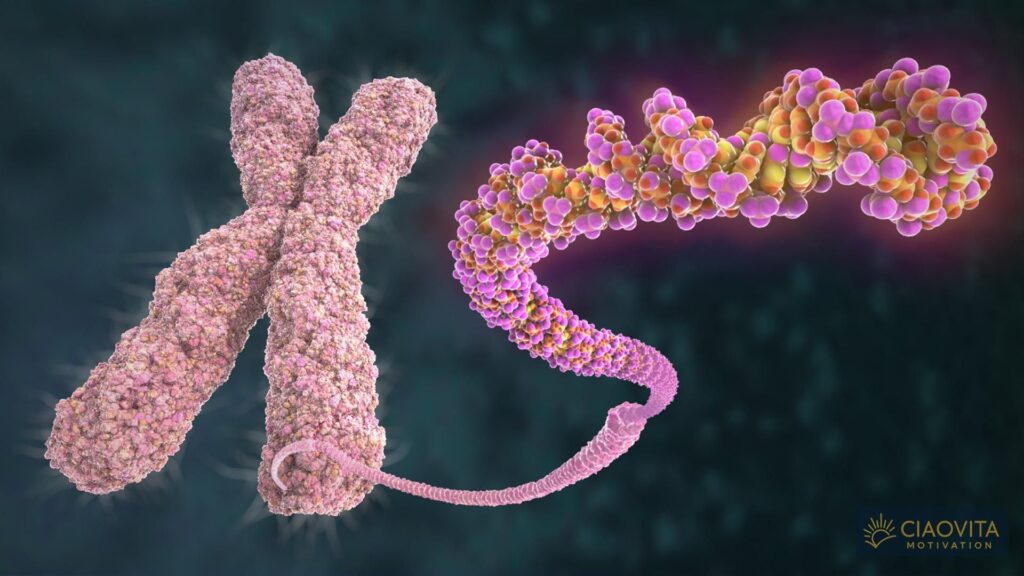
The four Yamanaka factors are transcription factors: OCT4, SOX2, KLF4 and MYC. When introduced into aged cells, they literally erase the cell’s aging memory, making it return to a young and flexible pluripotent state. Scientists call these reprogrammed cells induced pluripotent stem cells or iPSCs.
The discovery was shocking because scientists believed cell identity was essentially permanent once established. A heart cell remained a heart cell. A skin cell remained a skin cell. Yamanaka proved this wrong. He showed that cellular identity is maintained by epigenetic patterns, and changing those patterns could transform cells backward through developmental time.
Initial experiments converting adult cells to stem cells required continuous expression of Yamanaka factors for weeks. The process completely erased specialized cell identity, creating blank slate cells capable of becoming any cell type. While valuable for research and potential cell therapies, this complete reprogramming posed a significant problem for rejuvenation applications.
The partial reprogramming solution
If continuous Yamanaka factor expression erased cell identity, what would happen with brief exposure? Could cells be rejuvenated without losing their specialized functions? This question led to one of the most important discoveries in aging research: partial reprogramming or reprogramming-induced rejuvenation.
Researchers applied Yamanaka factors for short periods, using various strategies. Some used intermittent dosing schedules applying factors for days then stopping. Others used continuous but time-limited exposure. The key insight was timing. Apply factors long enough to rejuvenate but not so long that cells forget what they are.
The approach worked spectacularly. Cells exposed to partial reprogramming showed reversed aging markers while maintaining their identity. A heart cell remained a heart cell but functioned like a younger heart cell. The cellular reset was incomplete by design, reversing epigenetic age without erasing cell type specification.
Think of it like computer system optimization versus complete reformatting. Complete reformatting with full Yamanaka factor exposure erases everything, creating a blank system. Partial reprogramming optimizes the existing system, clearing accumulated errors while preserving programs and data. The cell stays functional in its role while regaining youthful operational capacity.
Studies published in Nature Aging demonstrated that partial reprogramming reverses multiple aging hallmarks. DNA methylation age decreased. Transcriptomes shifted toward youthful patterns. Cells regained proliferative capacity and resistance to stress. Mitochondrial function improved. Importantly, cells retained their specialized gene expression programs.
Spectacular experimental results across species
The first experiments tested partial reprogramming in mice with Hutchinson-Gilford progeria syndrome, a genetic condition causing rapid aging. Researchers applied Yamanaka factors in controlled pulses. Results were extraordinary. The mice lived longer than untreated progeria mice. Injury recovery improved. Diabetes symptoms ameliorated. Muscles regenerated better.
But the most impressive results came from normally aged mice. In experiments by Lu and colleagues published in Nature, very old mice received treatment for just one week. They showed rejuvenation signs in various organs. Metabolic parameters improved. Tissue structure became more youthful. It was as if their cells had traveled decades backward through biological time.
The vision restoration experiments proved particularly dramatic. Mice with glaucoma-induced blindness received OSK treatment targeting retinal ganglion cells. These nerve cells, which normally cannot regenerate in mammals, not only stopped dying but began growing again. Axons regenerated, formed new connections and restored visual function. The mice literally regained their sight.
Kidney tissue showed remarkable improvements. Aged kidneys typically display fibrosis, reduced function and accumulated cellular damage. Partially reprogrammed kidneys demonstrated increased regenerative capacity and more youthful tissue architecture. Skin cells from treated animals showed greater proliferation ability and reduced scarring tendency compared to untreated aged animals.
Heart, brain, liver and muscle tissues all responded positively. In cardiac tissue, aged cells that normally cannot divide resumed proliferation. Brain cells showed improved memory consolidation and cognitive performance markers. Liver regeneration capacity increased. Muscles demonstrated enhanced strength and faster recovery from injury.
Human cell testing confirms the approach
Animal studies provided compelling evidence, but would partial reprogramming work in human cells? Researchers tested the technique on human cells cultured in laboratories, using cells from donors of different ages including elderly individuals over 100 years old.
The results matched or exceeded mouse cell outcomes. Cells from centenarians returned to functioning like cells from young adults. All major aging markers improved dramatically. Telomeres, the protective DNA caps that shorten with age, lengthened significantly. Mitochondrial function improved, with increased energy production and reduced reactive oxygen species.
Epigenetic clocks, mathematical models that estimate biological age from DNA methylation patterns, showed dramatic reversals. Multiple clock types including Horvath, Hannum and Skin&Blood clocks registered decreases of 20-30 years. Transcriptomic age, measured by gene expression patterns, similarly reversed to match younger profiles.
A 2023 study published in Aging demonstrated something even more remarkable. Researchers developed chemical cocktails that could achieve similar rejuvenation without genetic manipulation. Using only small molecules, they reversed cellular age in human fibroblasts within less than one week. This chemical reprogramming approach offers potentially safer alternatives to genetic methods.
The experiments proved that human cells retain youthful epigenetic information even after decades of aging. Like the hypothetical backup copy in information theory, cells store instructions for youthfulness somewhere accessible. Partial reprogramming simply helps cells remember how to read those instructions again.
Understanding the molecular mechanisms
How exactly do Yamanaka factors reverse aging? The process involves coordinated changes across multiple epigenetic layers. When OSK factors enter a cell, they bind to DNA at specific genomic locations. These binding events trigger cascading molecular changes.
First, Yamanaka factors silence genes associated with aged cell states. They recruit chromatin-remodeling complexes that make DNA less accessible at aging-promoting gene locations. This effectively turns off programs that maintain aged cellular behavior. It’s like disabling applications that slow computer performance.
Simultaneously, the factors reactivate youthful gene expression programs. They modify DNA methylation patterns, removing methyl groups from genes that should be active in young cells. The enzymes TET1 and TET2 play critical roles in this DNA demethylation process. Research published in Nature proved that blocking TET enzyme activity prevents OSK-mediated rejuvenation, demonstrating these demethylases are essential.
Histone modifications also change dramatically. Young cells display specific patterns of histone methylation and acetylation that optimize gene accessibility and expression. Aged cells accumulate aberrant histone marks. Partial reprogramming restores youthful histone patterns, particularly at key developmental and housekeeping genes.
Chromatin structure undergoes global reorganization. Young cell nuclei show open, accessible chromatin configurations that facilitate proper gene regulation. Aged nuclei develop closed, condensed chromatin regions called heterochromatin that inappropriately silence genes. OSK treatment reopens chromatin, restoring the accessibility landscape characteristic of youth.
The remarkable aspect is that all these changes occur without altering the underlying DNA sequence. The genetic information remains identical. Only the interpretation layer changes. It’s analogous to repairing a scratched CD without changing the music encoded on it.
Safety considerations and tumor risk assessment
One major concern with cellular reprogramming is cancer risk. Rapidly dividing cells can become cancerous, and several Yamanaka factors, particularly MYC, are known oncogenes associated with tumor formation. Would partial reprogramming create cancers?
Extensive safety testing addressed this critical question. Multiple research groups conducted long-term studies in mice receiving continuous or cyclic partial reprogramming. In properly controlled experiments using short factor exposure, no increase in tumor formation occurred. Mice received treatment for over a year without developing cancers.
The key to safety lies in precise timing and factor selection. Continuous strong expression of all four factors for extended periods can indeed cause tumors. But brief, intermittent exposure using optimized protocols appears safe. Some researchers use only three factors, excluding MYC which poses the highest cancer risk while still achieving significant rejuvenation.
Alternative approaches further improve safety. Messenger RNA delivery methods provide temporary factor expression that naturally degrades after days. This eliminates permanent genetic modification risks. Chemical reprogramming using small molecules offers another potentially safer route, avoiding gene therapy entirely.
A 2024 study in Nature Communications comprehensively analyzed safety concerns, concluding that rejuvenation can be separated from pluripotency induction. The research emphasized distinguishing between reprogramming-induced rejuvenation and dedifferentiation, noting proper protocols avoid dangerous loss of cell identity.
Ongoing research continues refining safety parameters. Scientists test different factor combinations, exposure durations, delivery methods and cell type-specific protocols. The goal is establishing therapeutic windows where rejuvenation occurs without unwanted effects.
Multiple approaches and delivery methods
Scientists developed various strategies for applying cellular reprogramming. The diversity of approaches provides options for different applications and safety profiles.
Factor selection varies. Some protocols use all four classic Yamanaka factors OSKM. Others use only OSK, excluding MYC to reduce cancer risk while accepting slightly reduced efficiency. Researchers also identified alternative factors beyond the original four that can contribute to rejuvenation.
Delivery methods differ significantly. Adeno-associated viruses efficiently deliver factors to specific tissues in living animals. This enables in vivo reprogramming where rejuvenation occurs directly in the body rather than in extracted cells. Lentiviral vectors provide stable integration for long-term expression. Non-integrating episomal vectors offer safer transient expression.
Chemical reprogramming represents a major alternative. Rather than introducing genes, specific small molecule combinations can trigger similar epigenetic remodeling. The 2023 Harvard study identified six chemical cocktails achieving rejuvenation comparable to genetic approaches. Chemical methods avoid gene therapy risks and may prove easier to develop as pharmaceuticals.
Messenger RNA delivery provides another innovative approach. Synthetic mRNA encoding Yamanaka factors can be introduced into cells where it produces proteins temporarily before degrading. This transient expression achieves rejuvenation without permanent genetic modification.
Timing strategies also vary. Cyclic protocols alternate periods with and without factor expression. Continuous short-term exposure provides sustained factors for limited durations. Pulsed delivery gives brief intermittent doses. Each timing pattern produces different balances between efficacy and safety.
The future of anti-aging medicine
Cellular reprogramming opens extraordinary possibilities for treating age-related disease and extending healthspan. Imagine therapies that could rejuvenate specific organs before disease develops.
An aged heart could recover youthful pumping capacity, potentially preventing heart failure. The technology might reverse cardiac fibrosis and restore electrical conduction properties diminished by age. Elderly patients could regain cardiovascular function years before requiring transplantation.
Neurodegenerative diseases could potentially be prevented or reversed. Brain cells with early dementia signs could recover normal cognitive functions. The technique might clear abnormal protein aggregates and restore synaptic connectivity. Memory and executive function could improve rather than inevitably decline.
Muscle weakness associated with sarcopenia could reverse. Elderly individuals could regain strength and mobility approaching younger levels. This would dramatically improve quality of life and reduce fall risks. The difference between independence and assisted living might depend on muscle rejuvenation therapies.
Vision loss from age-related conditions could potentially be treated. The glaucoma studies proving visual restoration in blind mice suggest human applications may follow. Retinal degeneration from macular degeneration might respond similarly. Millions with progressive vision loss could maintain or recover sight.
However, significant challenges remain before human therapies emerge. Each organ and cell type responds differently to reprogramming, requiring customized protocols. Long-term effects need comprehensive evaluation. Delivery methods for human tissues must be developed and validated. Regulatory pathways for these novel therapies need establishment.
Remaining challenges and limitations
Despite promising results, important obstacles exist. The field is young, with many unknowns still requiring resolution before clinical applications become reality.
Cell type specificity poses challenges. Different cell types require different reprogramming protocols. Neurons respond differently than muscle cells. Liver cells differ from heart cells. Developing optimized protocols for each therapeutically relevant cell type demands extensive research.
Temporary effects present practical concerns. Cells eventually return to aged states, meaning treatments require periodic repetition. How often would patients need reprogramming therapy? What would long-term maintenance protocols involve? These questions lack definitive answers.
Incomplete understanding of mechanisms limits optimization. While researchers know reprogramming works, the complete molecular details remain unclear. Why do some cells respond better than others? What determines the optimal exposure duration? Deeper mechanistic knowledge would enable better protocol design.
Individual variation will likely affect outcomes. Human genetics, health status and accumulated damage levels differ enormously. Therapies may need personalization based on individual characteristics. Developing predictive biomarkers to guide treatment decisions represents an important research direction.
Ethical considerations will arise as capabilities advance. If aging becomes partially reversible, how should society allocate access to therapies? What economic and social structures need adaptation? These questions extend beyond science into policy and philosophy.
Regulatory pathways for reprogramming therapies don’t exist. Traditional drug approval frameworks weren’t designed for interventions targeting aging itself rather than specific diseases. How regulatory agencies will evaluate and approve such treatments remains unclear.
A fundamental shift in medicine’s approach
This research fundamentally changes how we conceptualize aging and medical intervention. Throughout history, medicine focused on treating specific diseases after they developed. Doctors diagnosed conditions and prescribed treatments to manage symptoms or slow progression.
The aging paradigm remained largely unquestioned. People accepted gradual decline as natural and inevitable. Medicine could delay some consequences but not alter the underlying aging process. We repaired individual broken components without addressing why everything breaks down simultaneously with age.
Cellular reprogramming challenges this entire framework. For the first time, solid scientific evidence demonstrates that reversing biological age at the cellular level is possible. We’re no longer limited to treating aging’s consequences. We can potentially target the process causing those consequences.
The difference resembles repairing an old house versus making the house structurally new again. Traditional medicine patches holes and fixes broken systems. Cellular reprogramming renovates the entire structure from foundation upward. Both approaches have value, but the latter offers more comprehensive and lasting benefits.
This shift has profound implications for healthcare systems, pharmaceutical development and medical research priorities. If we can safely rejuvenate tissues, preventing age-related disease becomes realistic rather than aspirational. Healthcare could shift from expensive late-stage interventions to early prevention through periodic rejuvenation.
Conclusion
Cellular reprogramming represents one of the most significant biomedical discoveries of our time. The ability to reverse aging at the molecular level, making old cells function young again through epigenetic reprogramming, fundamentally challenges our assumptions about aging’s inevitability.
The scientific evidence is compelling. Blind mice recover vision. Old mice show multi-organ rejuvenation. Human cells from centenarians return to youthful function. Multiple research groups across institutions worldwide have replicated and extended these findings. The reproducibility and consistency of results across diverse experimental systems provide strong validation.
Safety concerns, while important, appear addressable through proper protocols. Careful timing and factor selection enable rejuvenation without tumors or loss of cell identity. Alternative approaches using chemicals or RNA rather than permanent genetic modification further improve safety profiles.
Significant work remains before human therapies emerge. Years of research lie ahead to optimize protocols, complete safety testing and develop practical delivery methods. Understanding how lifestyle choices affect biological age can help individuals while awaiting clinical applications. But the fundamental breakthrough has occurred.
For the first time in human history, we possess solid scientific proof that aging can be reversed at the cellular level. The fountain of youth that humanity has sought for millennia may not be mythological but rather a biological reality within scientific reach. The coming years will reveal how this revolutionary discovery transforms from laboratory finding to medical therapy that extends human healthspan and potentially lifespan itself.
References
- Cipriano A, et al. Mechanisms, pathways and strategies for rejuvenation through epigenetic reprogramming. Nat Aging. 2024;4(1):25-44.
- Lu Y, et al. Reprogramming to recover youthful epigenetic information and restore vision. Nature. 2020;588(7836):124-29.
- Yang JH, et al. Chemically induced reprogramming to reverse cellular aging. Aging (Albany NY). 2023;15(13):5966-89.
- Simpson DJ, Olova NN. Cellular reprogramming and epigenetic rejuvenation. Clin Epigenetics. 2021;13(1):170.
- Kerepesi C, et al. The long and winding road of reprogramming-induced rejuvenation. Nat Commun. 2024;15(1):1853.
- Browder KC, et al. Gene therapy-mediated partial reprogramming extends lifespan and reverses age-related changes in aged mice. Cell Reprogram. 2024;26(1):26-42.
- Ocampo A, et al. In vivo amelioration of age-associated hallmarks by partial reprogramming. Cell. 2016;167(7):1719-33.
- Rando TA, Chang HY. Aging, rejuvenation, and epigenetic reprogramming: resetting the aging clock. Cell. 2012;148(1-2):46-57.
© 2025 Alice & Marcus Guimarães. All rights reserved.This site is proudly created with WordPress.