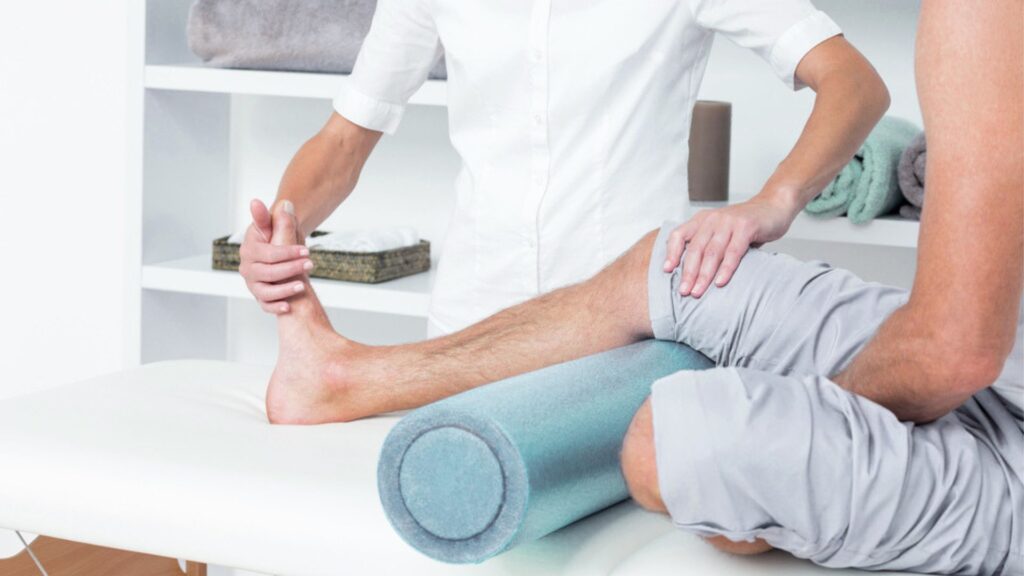
Knee Replacement Rehabilitation: Before and After Surgery
Prehabilitation, Recovery Strategies and Evidence-Based Outcomes
Every year, over 700,000 Americans undergo total knee replacement surgery. By 2030, that number could reach 1.26 million per year. Yet for most patients, the real question isn’t whether surgery will help. It’s how to make sure it does.
Total knee replacement rehabilitation has evolved dramatically in recent years. New research shows that recovery doesn’t begin in the hospital room. It begins weeks before the operation, in a gym, a pool or a living room. Scientists call this pre-surgical preparation “prehabilitation,” and the data behind it grows stronger every year.
A landmark 2023 meta-analysis published in JAMA Network Open analyzed 48 trials involving 3,570 patients. It found that structured exercise before surgery improves muscle strength, physical function, and quality of life. A 2025 umbrella review — an overview of all available systematic reviews and meta-analyses — confirmed that these benefits extend into the postoperative period as well.
This article covers the full journey of knee replacement rehabilitation — from the first exercise session before surgery to the final milestones of recovery at home or in the clinic. Whether surgery is weeks away or already behind you, the science offers clear guidance on what to do and when to do it.
The waiting room problem: why prehabilitation matters
Most people treat rehabilitation as something that begins after surgery. The evidence strongly disagrees.
When a patient receives a surgery date, a waiting period begins. In the United States, that wait often stretches four to twelve weeks. During that time, many patients reduce their physical activity because of pain. Muscles weaken. Joint mobility decreases. By the time the operation arrives, the body has deconditioned further from where it started.
This is exactly where prehabilitation for knee surgery becomes a game-changer. Prehabilitation means structured exercise and conditioning completed before the operation. Think of it as training for a marathon. You wouldn’t show up on race day without weeks of preparation and surgery is no different. The body undergoes major stress during a joint replacement, and arriving in better physical condition directly changes how well you handle it.
A 2022 systematic review and meta-analysis published in the Journal of Orthopaedic & Sports Physical Therapyanalyzed 16 trials with 968 participants. Researchers found that prehabilitation improved knee functioning both before surgery and for up to three months afterward. The effect size before surgery was significant (Hedges’ g = 1.23), meaning the improvement was clinically meaningful, not just a statistical artifact.
The 2023 JAMA Network Open meta-analysis expanded this picture considerably. Across 48 trials and 3,570 patients, prehabilitation showed moderate-certainty evidence of improved function and muscle strength before surgery. Specifically, knee flexor strength — the ability to bend the knee — improved significantly with structured preoperative training.
A 2025 umbrella review in JOSPT — the highest level of evidence available, summarizing all prior systematic reviews and meta-analyses — confirmed that resistance training-focused and multimodal prehabilitation programs produce measurable postoperative benefits for both total knee and hip arthroplasty patients.
One finding appears consistently across all major reviews: prehabilitation shortens hospital stays. Patients who completed preoperative exercise programs spent fewer days in the hospital compared to those who did not. Shorter hospital stays mean lower costs, less risk of hospital-acquired infections, and faster return to familiar environments.
A 2025 meta-analysis published in Frontiers in Medicine found that prehabilitation reliably reduced postoperative pain scores — especially at one and three months after surgery. The effect on knee flexion range of motion was more modest, suggesting that pain relief and functional recovery may follow different recovery timelines.
Understanding how joint inflammation destroys cartilage and surrounding tissue helps clarify why conditioning before surgery matters so much. Similarly, patients with diabetes or metabolic conditions should review how blood sugar control affects bone healing and joint replacement outcomes, as metabolic health directly influences surgical success and recovery speed.
Building your prehabilitation program: what the evidence recommends
Knowing that prehabilitation works is only half the story. Knowing what to actually do matters just as much.
Research consistently points to programs lasting at least four to six weeks with a minimum of two sessions per week. This timeline aligns with exercise science: neuromuscular adaptations, strength gains, and improved movement patterns require time to develop. Programs shorter than three weeks rarely produce enough change to influence surgical outcomes.
A well-designed TKA exercise program before surgery typically includes these five components:
- Quadriceps and hamstring strengthening — Straight-leg raises, mini-squats, and leg press exercises build the primary muscles supporting the knee joint.
- Hip abductor and extensor work — Strong hip muscles protect the knee and improve walking patterns both before and after surgery.
- Balance and proprioception training — A 2024 meta-analysis found that preoperative balance training significantly improved walking ability and stability in older patients following knee replacement.
- Flexibility and range-of-motion work — Gentle stretching maintains or improves joint mobility before surgery.
- Cardiovascular conditioning — Low-impact aerobic activity reduces surgical risk and builds stamina for recovery.
For patients with severe osteoarthritis who find land-based exercise painful, aquatic therapy offers a valuable and science-supported alternative. Water reduces joint stress through buoyancy, making movement accessible even with significant pain. A pilot study on aquatic prehabilitation found improvements in cognitive function and depression scores in older patients — benefits that extend well beyond the knee.
High-intensity resistance training shows particular promise when tolerated. A 2024 systematic review and meta-analysis found that supervised, gym-based, high-intensity preoperative strength training led to better postoperative physical function and improved quality of life compared to lower-intensity home programs.
The 2024 Journal of Arthroplasty systematic review added an important nuance. It focused specifically on patients at higher risk of poor outcomes — those with obesity, limited range of motion, psychological vulnerability or frailty. For these patients, personalized prehabilitation produced improvements that standard programs often fail to deliver. Tailoring the program to the individual matters as much as the exercises themselves.
Mental health deserves attention in any prehabilitation plan. A 2025 meta-analysis found that preoperative exercise significantly improved mental health scores on the SF-36 (48.17 vs. 39.66 in controls, p = 0.01). For patients facing major surgery, reducing anxiety and building confidence is just as important as building quadriceps strength.
The critical postoperative period: starting recovery from day one
Surgery changes everything. The moment the operation ends, a new phase of total knee replacement rehabilitationbegins — and timing matters.
Muscle loss after knee replacement happens fast. Research shows quadriceps strength drops by 30 to 50 percent within the first month after surgery. Walking speed slows. Stair-climbing ability declines significantly. Without structured postoperative knee recovery, these deficits can persist for a year or longer.
Early mobilization makes a critical difference. Studies support starting gentle movement within 24 to 48 hours of the operation. Early walking — even short distances with assistance — reduces complications such as blood clots and pneumonia. It also signals to the nervous system that movement is safe and expected.
A comprehensive 2022 systematic review and meta-analysis examined 18 randomized controlled trials comparing modified postoperative rehabilitation programs with standard approaches. Researchers measured six key outcomes including knee extension, knee flexion, pain scores, WOMAC totals, the six-minute walk test and the Timed Up and Go test.
The review found that no single modification to rehabilitation programs produced consistently superior results across all outcomes. This suggests that consistency and timing of starting rehabilitation matters more than any specific exercise combination.
A typical postoperative knee recovery program includes:
- Range-of-motion exercises — Heel slides, knee flexion work and gentle extensions to restore joint movement progressively.
- Progressive resistance training — Exercises targeting quadriceps, hamstrings and hip muscles with increasing resistance over time.
- Functional training — Practiced movements for standing, sitting and stair climbing to restore daily activity.
- Gait retraining — Walking practice with proper mechanics to prevent compensatory movement patterns that strain other joints.
A 2025 systematic review published in Musculoskeletal Care examined postoperative rehabilitation specifically for patients at high risk of poor outcomes. Across 23 trials with 2,282 patients, both exercise-based therapies and non-exercise approaches — including education, psychological support, and lymphatic drainage — contributed to better recovery. This confirms that total knee replacement rehabilitation works best when it addresses the whole person, not just the surgical knee.
Where to recover: home, clinic or screen?
One of the most practical questions patients ask their surgeon is simple: do I need to attend a clinic for rehabilitation or can I recover at home?
The answer may surprise many patients. The evidence consistently shows that home-based postoperative knee recovery produces outcomes equivalent to clinic-based programs for most patients.
A 2019 systematic review and meta-analysis published in JAMA Network Open analyzed six trials with 752 participants. Researchers found no clinically important differences in mobility, patient-reported pain, function, quality of life or range of motion between patients who attended outpatient or inpatient rehabilitation and those who completed home programs. These results held at both 10 weeks and 52 weeks after surgery.
The largest available study on this question — a 2025 meta-analysis covering 20 randomized controlled trials and 3,706 patients — confirmed these findings across multiple outcome measures, including the WOMAC score, Knee Injury and Osteoarthritis Outcome Score (KOOS), Oxford Knee Score, six-minute walk test, and SF-36 quality of life survey. Home-based knee replacement rehabilitation proved non-inferior to conventional clinic-based care.
This does not mean home rehabilitation suits every patient. Those who benefit most from home-based programs typically have strong social support, adequate motivation and no major postoperative complications. Patients with frailty, obesity, significant range-of-motion deficits or psychological barriers often benefit more from supervised clinic settings, where monitoring and accountability improve adherence.
Telerehabilitation adds a third option that continues to gain scientific support. A 2023 systematic review and meta-analysis covering nine studies with 1,944 patients compared home-based tele-rehabilitation programs with hospital-based outpatient programs. At six weeks, outcomes were similar. At 14 weeks, hospital-based programs showed modest advantages in functional outcome scores, but home-based tele-rehabilitation showed slightly better knee range of motion. By 52 weeks, no significant differences existed between groups.
These findings have major implications for designing knee arthroplasty outcomes research and clinical care. A motivated patient with a smartphone, clear exercise instructions, and a weekly check-in with a physical therapist can achieve the same functional result as one attending a clinic three times per week. This opens access to quality rehabilitation for patients in rural areas or with transportation limitations.
The recovery journey after cartilage surgery shares many principles with knee replacement rehabilitation, particularly the importance of progressive loading, patience with healing timelines, and respecting the biological pace of tissue repair.
Patients exploring additional options for knee health may also find value in reviewing PRP therapy for knee pain and individualized approaches to knee osteoarthritis treatment, which offer complementary perspectives on managing joint health beyond rehabilitation alone.
The complete picture: integrating pre and postoperative care
The most effective approach to total knee replacement rehabilitation treats prehabilitation and postoperative recovery not as separate events, but as one continuous journey.
Modern orthopedic medicine increasingly adopts Enhanced Recovery After Surgery (ERAS) protocols — coordinated, evidence-based systems designed to prepare and support the patient before, during and after the operation. A 2024 meta-analysis published in the Postgraduate Medical Journal analyzed ERAS protocols in hip and knee arthroplasty. These integrated systems significantly shortened hospital stays, reduced transfusion rates, and lowered 30-day postoperative mortality, without increasing complications or readmission rates.
ERAS protocols for knee replacement typically include six core elements:
- Preoperative patient education about what to expect during and after surgery
- Prehabilitation exercises targeting strength, flexibility and cardiovascular fitness
- Nutritional optimization in the weeks before the operation
- Multimodal pain management during and after surgery to reduce opioid dependency
- Early mobilization starting within the first 24 hours after surgery
- Structured postoperative rehabilitation with clear milestones and progressive goals
The concept of multimodal prehabilitation extends these principles even further. Most studies have focused on exercise alone, but comprehensive programs also address smoking cessation, psychological support, sleep quality and nutritional status. Recovery from joint surgery depends not only on muscle strength but also on metabolic health, mental resilience and social support systems.
Patient adherence remains a critical variable across all studies. Research reports that most participants complete at least 70 percent of prescribed prehabilitation sessions when they receive clear instructions and understand why each exercise matters. Education about the biological purpose of each component, why the quadriceps matters for surgical recovery, why balance training prevents falls postoperatively, significantly improves compliance and motivation.
A 2023 systematic review from Brown University reinforced the importance of program design. Across 13 randomized controlled trials in total knee arthroplasty, prehabilitation programs showed evidence of increased strength and reduced hospital length of stay. The review emphasized that the composition and delivery method of the program influence results, supervised programs with clear progression showed better outcomes than unsupervised, low-intensity approaches.
Timing within the program also matters. Programs shorter than three weeks rarely produce measurable neuromuscular changes. Programs of at least four to six weeks, incorporating progressive overload, gradually increasing exercise challenge as the body adapts, consistently produce the best preoperative gains. This same principle of progressive overload applies equally to postoperative knee recovery, where the goal shifts from building surgical readiness to restoring full function.
The quality of available evidence continues to improve. Many earlier trials carried moderate to high risk of bias due to the difficulty of blinding patients in exercise studies and heterogeneity in program design. The most recent umbrella reviews and large meta-analyses offer a clearer picture. Future research will benefit from longer follow-up periods, tracking patients for two or more years after surgery, to understand how prehabilitation influences long-term joint function and quality of life.
For patients who want to protect their skeletal health throughout the rehabilitation journey, understanding how to prevent fragility fractures and maintain bone strength adds an important layer to the recovery picture. Strong bones support the implant and the muscles surrounding it, particularly in older patients.
The key message from the growing body of research is clear: knee replacement rehabilitation produces the best outcomes when patients and healthcare providers treat it as a system — starting weeks before surgery, continuing through the postoperative period, and adapting to individual needs, goals, and resources.
Conclusion
Knee replacement surgery represents a major life event. The weeks before and after the operation shape everything that follows — and the science gives patients clear tools to influence those outcomes.
Total knee replacement rehabilitation that begins before surgery consistently produces stronger muscles, shorter hospital stays, and better postoperative function. This applies whether patients exercise in a gym, a pool, or their own living room, as long as the program runs for at least four to six weeks with progressive intensity.
After surgery, postoperative knee recovery should start within the first 48 hours. Early mobilization, structured exercise and functional training restore strength and daily function faster than passive rest. Home-based and clinic-based programs deliver equivalent outcomes for most patients, with telerehabilitation offering a science-backed modern alternative.
The evidence supports a proactive, integrated approach. Talk to your surgeon and physical therapist about starting a structured prehabilitation for knee surgery program as soon as you receive a surgery date. Ask about ERAS protocols at your healthcare facility. Set clear rehabilitation goals for both the preoperative and postoperative phases.
Your recovery does not begin in the operating room. It begins the day you decide to prepare.
References
- Gränicher P, Mulder L, Lenssen T, Scherr J, Swanenburg J, de Bie R. Prehabilitation improves knee functioning before and within the first year after total knee arthroplasty: a systematic review with meta-analysis. J Orthop Sports Phys Ther. 2022;52(11):709-25.
- Punnoose A, Claydon-Mueller LS, Weiss O, Zhang J, Rushton A, Khanduja V. Prehabilitation for patients undergoing orthopedic surgery: a systematic review and meta-analysis. JAMA Netw Open. 2023;6(4):e238050.
- Su W, Zhou Y, Qiu H, Wu H. The effects of preoperative rehabilitation on pain and functional outcome after total knee arthroplasty: a meta-analysis of randomized controlled trials. J Orthop Surg Res. 2022;17(1):175.
- Konnyu KJ, Thoma LM, Cao W, Aaron RK, Panagiotou OA, Bhuma MR, et al. Prehabilitation for total knee or total hip arthroplasty: a systematic review. Am J Phys Med Rehabil. 2023;102(1):1-10.
- Karimijashni M, Yoo S, Barnes K, Lessard-Dostie H, Ramsay T, Poitras S. Prehabilitation in patients at risk of poorer outcomes following total knee arthroplasty: a systematic review. J Arthroplasty. 2025;40(5):1367-76.
- Karimijashni M, et al. Postoperative rehabilitation interventions in patients at risk of poorer outcomes following total knee arthroplasty: a systematic review. Musculoskelet Care. 2025;23:e70054.
- Zhang Q, Chen Y, Li Y, Liu R, Rai S, Li J, et al. Enhanced recovery after surgery in patients after hip and knee arthroplasty: a systematic review and meta-analysis. Postgrad Med J. 2024;100(1181):159-73.
- Zhang W, Lu X, Yang N, Zhu X, Hu H. Prehabilitation is effective in relieving pain after knee arthroplasty, but has little effect on length of stay and knee function: a meta-analysis of randomized controlled trials. Front Med. 2025;12:1457.
- Buhagiar MA, Naylor JM, Harris IA, Xuan W, Adie S, Lewin A. Assessment of outcomes of inpatient or clinic-based vs home-based rehabilitation after total knee arthroplasty: a systematic review and meta-analysis. JAMA Netw Open. 2019;2(4):e192810.
- Zhang H, Wang J, Jiang Z, Deng T, Li K, Nie Y. Home-based tele-rehabilitation versus hospital-based outpatient rehabilitation for pain and function after initial total knee arthroplasty: a systematic review and meta-analysis. Medicine (Baltimore). 2023;102(51):e36764.
- Adebero T, Omana H, Somerville L, Lanting B, Hunter SW. Effectiveness of prehabilitation on outcomes following total knee and hip arthroplasty for osteoarthritis: a systematic review and meta-analysis of randomized controlled trials. Disabil Rehabil. 2024;46(24):5771-90.
- [JOSPT 2025 Umbrella Review]. The effects of structured prehabilitation on postoperative outcomes following total hip and total knee arthroplasty: an overview of systematic reviews and meta-analyses of randomized controlled trials. J Orthop Sports Phys Ther. 2025.
© 2025 Alice & Marcus Guimarães. All rights reserved.This site is proudly created with WordPress.