New Hope for Knee Osteoarthritis Treatment Options.
Why PRP and Stem Cells Beat Hyaluronic Acid Injections
Knee osteoarthritis affects millions worldwide, with over 20% of people over 45 experiencing this degenerative joint condition. If you have been dealing with knee pain and stiffness, you probably know how frustrating it can be to find effective treatment options. Recent scientific evidence brings encouraging news: biological therapies like platelet-rich plasma (PRP) and bone marrow stem cells are proving significantly more effective than traditional hyaluronic acid injections.
Two comprehensive studies examined these joint health treatments, and their findings challenge what doctors have been recommending for years. The research involved nearly 2,400 patients and followed them for up to 12 months after treatment. The results were clear: patients who received PRP or bone marrow concentrate experienced better pain relief and improved function compared to those who got standard hyaluronic acid injections.
Understanding Your Treatment Options
Before diving into the research findings, let’s clarify what each treatment involves. Hyaluronic acid has been the go-to injection for knee osteoarthritis for many years. This substance naturally exists in your joint fluid, acting like oil in an engine to reduce friction. Doctors inject synthetic versions to improve lubrication and reduce pain.
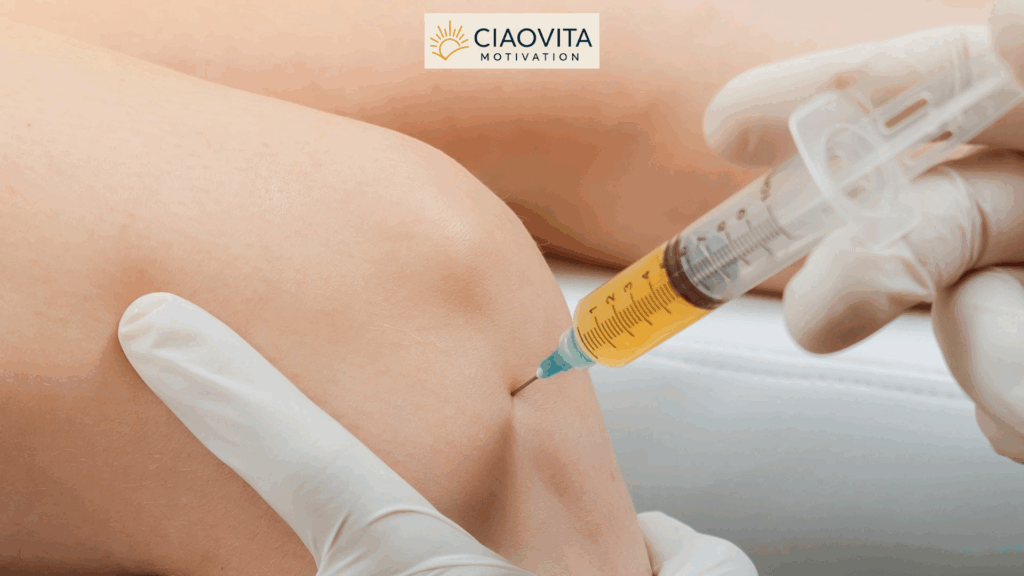
Platelet-rich plasma takes a different approach. Medical professionals draw your blood, spin it in a centrifuge to concentrate the platelets, then inject this concentrated solution into your knee. These platelets release growth factors that help reduce inflammation and potentially promote cartilage regeneration.
Bone marrow concentrate goes one step further. Doctors extract bone marrow from your hip bones, process it to concentrate the stem cells, then inject these cells into your knee. These mesenchymal stem cells can differentiate into various tissue types and release substances that reduce inflammation while promoting healing.
What the Science Actually Shows
The first major study analyzed 27 clinical trials comparing these treatments. Researchers examined pain scores, function levels and quality of life measures. The results were striking. Patients receiving PRP showed significantly better outcomes across all measures compared to those getting hyaluronic acid. Their pain scores improved by an average of 11 points more on a 100-point scale.
The bone marrow stem cell group showed even more impressive results. Their pain scores improved by approximately 12 points more than the hyaluronic acid group. Function and daily living activities also improved significantly. These differences might sound small, but for someone struggling with chronic knee pain, they represent meaningful relief that affects everyday activities like walking, climbing stairs or playing with grandchildren.
The second study followed 18 patients who received either stem cells alone or stem cells combined with PRP. Both groups showed substantial improvements. The stem cell only group improved their overall knee scores by 29%, while the combined treatment group improved by 31%. More importantly, these improvements lasted throughout the entire 12-month follow-up period.
Why Biological Therapies Work Better
The superior results from PRP and stem cell treatments make sense when you understand what causes osteoarthritis. This inflammatory joint disease involves more than just worn cartilage. The entire joint environment becomes inflamed. Traditional treatments like hyaluronic acid mainly address lubrication but do little to calm inflammation or promote healing.
Platelet-rich plasma contains numerous growth factors that actively combat inflammation. These include transforming growth factor beta, insulin-like growth factor and fibroblast growth factor. These substances don’t just mask symptoms. They potentially help your body repair damaged tissue.
Bone marrow stem cells offer additional benefits. These cells can transform into different tissue types including cartilage cells. They also release anti-inflammatory substances that modify the joint environment. Think of it as giving your knee the building blocks and instructions it needs to heal itself, rather than just temporarily reducing friction.
Safety Considerations Matter
Any medical treatment carries risks, so safety is crucial when comparing treatment options. The good news is that all three treatments showed excellent safety profiles. The studies reported minimal side effects, with the most common being temporary mild to moderate knee pain after injection.
In the 18-patient study, only 5 patients experienced any adverse effects, and none required hospitalization or additional procedures. All side effects resolved on their own or with simple pain medication. This safety record is particularly impressive considering these were minimally invasive treatments performed in outpatient settings.
Compare this to surgical options like total knee replacement, which, while effective for severe cases, involves significant risks, long recovery times and high costs. The biological therapies offer a middle ground for patients whose disease has not progressed to the point where surgery is necessary.
Does Combining Treatments Help?
You might wonder whether combining PRP with stem cells provides additional benefits. The research offers an interesting answer: not really. While both treatments work well, adding PRP to stem cells did not produce significantly better results than stem cells alone.
This finding has practical implications. If you are considering these treatments, stem cells alone might be just as effective as the combined approach. This could potentially reduce costs and simplify the treatment process. However, both options clearly outperformed hyaluronic acid, so either represents a solid choice.
Real World Application
Let’s consider a practical example. Imagine you are 58 years old with moderate knee osteoarthritis. Walking upstairs hurts. Your doctor has recommended hyaluronic acid injections. Based on this research, you might ask about PRP or stem cell options instead.
The stem cell procedure would involve a single visit where doctors extract bone marrow from your hip under sedation so you feel no pain, process it in a lab for 2-3 weeks, then inject the concentrated cells into your knee. You would need crutches for two weeks but could return to normal activities gradually.
The results? Based on the study data, you could expect roughly 30% improvement in your knee function and pain levels. That might mean less pain climbing those stairs, better sleep because your knee does not ache at night and the ability to take evening walks you have been avoiding.
What About Cost and Availability?
Here is an important consideration: insurance coverage varies significantly. Hyaluronic acid injections are typically covered by most insurance plans. PRP and stem cell treatments often are not, meaning you might pay out of pocket. Costs can range from $350 to $1,700 per PRP injection, while stem cell treatments can be even more expensive.
However, when weighing costs, consider the bigger picture. If these treatments provide better and longer-lasting relief, they might reduce your need for pain medications, physical therapy sessions and eventually delay or prevent the need for surgery. The initial higher cost might prove economical over time.
Availability also varies. Not all orthopedic clinics offer these treatments. You may need to seek out specialists in regenerative medicine or sports medicine who have experience with these procedures.
Looking at Long-Term Outcomes
The studies followed patients for 12 months, showing sustained improvements throughout this period. This durability is crucial because knee osteoarthritis is a chronic condition. You need treatments that provide lasting relief, not just temporary improvement.
Interestingly, most improvement occurred within the first month after treatment. This relatively quick onset of benefits means you would not wait long to know whether the treatment is working for you. Patients then maintained these gains throughout the follow-up period, suggesting the treatments create lasting changes in the joint environment rather than providing temporary relief.
Who Benefits Most?
The research included patients with moderate to severe osteoarthritis (grades 2-4 on standard rating scales). This suggests these treatments work across a spectrum of disease severity. You do not need to catch your osteoarthritis at the earliest stages to benefit.
However, the studies did exclude certain patients: those with diabetes, immune system problems, very severe obesity (BMI over 40) or post-traumatic arthritis. If you fall into these categories, discuss with your doctor whether these treatments might still be appropriate for you.
Additional Considerations for Optimal Treatment
Recent research suggests that nutrition, metabolism and genetics also play important roles in treatment success. Your body chemistry, nutritional status and genetic factors can influence how well you respond to these biological therapies.
Furthermore, scientists have discovered a surprising connection between gut microbiome and osteoarthritis. The health of your digestive system’s bacterial population may affect joint inflammation and treatment outcomes.
The Bottom Line
The scientific evidence strongly supports platelet-rich plasma and bone marrow stem cell injections as superior alternatives to hyaluronic acid for treating knee osteoarthritis. Both biological therapies provide better pain relief, improved function and enhanced quality of life. The safety profiles are excellent, with minimal side effects reported.
If you are currently using hyaluronic acid injections with limited results, or if you are exploring treatment options for your knee pain, consider discussing PRP or stem cell therapy with your doctor. While these treatments may cost more upfront and might not be covered by insurance, the superior results could make them worthwhile investments in your joint health and overall quality of life.
These minimally invasive treatments offer hope for the millions suffering from this inflammatory joint disease. They represent a middle path between conservative treatments that provide limited relief and major surgery that carries significant risks and recovery time.
Ready to take the next step? Talk to your orthopedic specialist about whether PRP or stem cell therapy might be right for your knee osteoarthritis. Your knees have carried you through life; they deserve the most effective treatment available.
References
- Belk JW, Lim JJ, Keeter C, McCulloch PC, Houck DA, McCarty EC, Frank RM, Kraeutler MJ. Patients With Knee Osteoarthritis Who Receive Platelet-Rich Plasma or Bone Marrow Aspirate Concentrate Injections Have Better Outcomes Than Patients Who Receive Hyaluronic Acid: Systematic Review and Meta-analysis. Arthroscopy. 2023 Jul;39(7):1714-34.
- Bastos R, Mathias M, Andrade R, Bastos R, Balduino A, Schott V, Rodeo S, Espregueira-Mendes J. Intra-articular injections of expanded mesenchymal stem cells with and without addition of platelet-rich plasma are safe and effective for knee osteoarthritis. Knee Surg Sports Traumatol Arthrosc. 2018.
© 2025 Alice & Marcus Guimarães. All rights reserved.This site is proudly created with WordPress.