Platelet-Rich Plasma: Your Blood’s Hidden Healing Power
Growth Factors, PRP Therapy and Regenerative Medicine
What if your body already carried everything it needs to heal itself? Platelet-rich plasma, better known as PRP, is one of the most exciting developments in modern regenerative medicine. Scientists discovered that by concentrating specific healing cells from your own blood and injecting them into damaged tissue, the body heals faster, more completely, and more naturally than it would on its own.
Over the past decade, hundreds of randomized controlled trials and systematic reviews have studied platelet-rich plasma across dozens of medical conditions, from knee arthritis to chronic wounds, from sports injuries to hair loss. The evidence is impressive, though nuanced. PRP works, but not always in the same way, not for every person, and not for every condition. A landmark 2020 review in the International Journal of Molecular Sciences established the modern scientific framework for understanding PRP’s mechanisms and clinical potential.
This article explains what platelet-rich plasma is, how it works inside your body, where it delivers the strongest results, and what you need to know before considering this treatment. All information draws on the latest peer-reviewed scientific evidence, translated into plain, accessible language.
What happens inside your blood when PRP goes to work
Most people know platelets as the blood cells that form a clot when you cut yourself. But their role in healing goes far beyond stopping bleeding. Platelets are small, disc-shaped cell fragments produced in the bone marrow. Inside each platelet are tiny storage compartments called granules, packed with hundreds of biologically active molecules that orchestrate tissue repair.
When a platelet gets activated, by contact with damaged tissue or by chemical signals, it releases the contents of those granules into the surrounding environment. These released molecules are called growth factors, and they include some of the most powerful healing agents your body produces. Here is what each key growth factor does:
- Platelet-Derived Growth Factor (PDGF) — stimulates cell growth and initiates wound healing
- Transforming Growth Factor-beta (TGF-β) — regulates tissue remodeling and collagen production
- Vascular Endothelial Growth Factor (VEGF) — triggers the formation of new blood vessels
- Insulin-like Growth Factor-1 (IGF-1) — promotes cell proliferation and migration
- Epidermal Growth Factor (EGF) — supports skin and epithelial tissue repair
- Fibroblast Growth Factor (FGF) — helps regenerate connective tissue and blood vessels
Together, these molecules create a powerful regenerative microenvironment, a set of biological conditions that strongly favor healing. A comprehensive 2024 review in the journal Biomedicines confirmed that PRP enhances tissue repair through four key pathways: platelet adhesion and cell recruitment, immunomodulation (calming the immune system), angiogenesis (new blood vessel formation), and serotonin-mediated pain modulation.
Here is the surprising part most people don’t know. Roughly 90% of all the serotonin in your body is stored in platelets, not in the brain. When you concentrate platelets for PRP treatment, you also deliver a massive surge of serotonin directly to the injection site. In peripheral tissues, this serotonin acts as a signaling molecule that influences immune cell behavior, supports blood vessel formation, and modulates pain signals at nerve endings.
This serotonin connection may explain one of PRP’s most clinically interesting phenomena: patients often report pain relief that persists long after the injected platelets have cleared from the body, typically within days to weeks. This suggests that platelet-rich plasma does not simply deliver a short-term chemical dose, but may actually reset local pain pathways for lasting relief.
In normal blood, platelet counts range from about 150,000 to 350,000 per microliter. For PRP to be therapeutically effective, clinical research shows concentrations must reach at least 1,000,000 platelets per microliter, roughly five to seven times normal levels. More platelets mean more growth factors delivered directly to the damaged area, which is why the preparation method matters enormously. The optimal concentration for promoting new blood vessel growth appears to be around 1.5 million platelets per microliter. Above that threshold, the angiogenic effect may paradoxically decline, which teaches us that with PRP, more is not always better.
How PRP is prepared and why not all PRP is the same
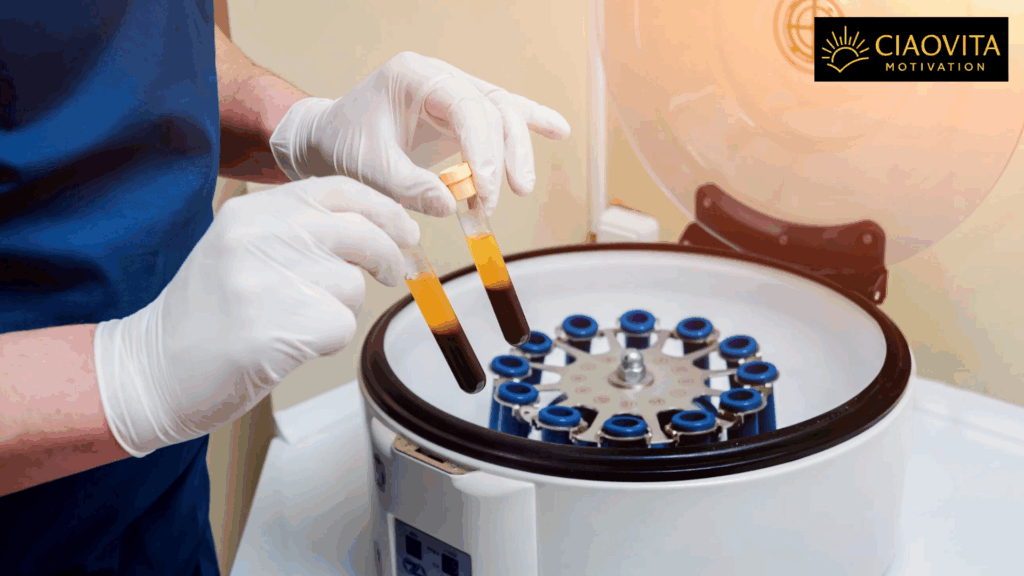
Creating platelet-rich plasma sounds simple: draw some blood, spin it in a centrifuge to separate components, collect the platelet-rich layer, and inject it. But the details of this process make a dramatic difference in the final product and in whether PRP therapy actually works.
A practical example illustrates this clearly. Imagine two patients with knee arthritis at different clinics, both receiving what their doctors call a PRP injection. Clinic A uses a device that produces 800,000 platelets per microliter with no white blood cells. Clinic B produces 2,000,000 platelets per microliter with significant white blood cell content. These are biologically very different preparations, both technically called PRP, but with distinct biological properties and potentially different clinical outcomes.
The critical variables in PRP preparation include centrifuge speed and duration, whether white blood cells (leukocytes) are included or removed, the use of an activating agent before injection, the anticoagulant used when drawing blood, and the temperature and handling conditions of the sample.
White blood cells are a particularly debated factor. Leukocyte-Rich PRP (LR-PRP) deliberately includes white blood cells, while Leukocyte-Poor PRP (LP-PRP) removes them. Neutrophils, first-responder immune cells, release enzymes that can damage tendon tissue when present in excess. Monocytes can transform into macrophages that initially fight infection and later switch to supporting tissue repair. A 2023 meta-analysis in Frontiers in Medicine found that LP-PRP produces significantly greater pain reduction in knee osteoarthritis than LR-PRP, a clinically relevant finding.
The lack of standardization across preparation systems remains the single greatest challenge in the field. Multiple major systematic reviews consistently cite this variability as the primary reason PRP results are inconsistent across studies. Researchers now advocate for complete transparency in reporting: documenting exact platelet count, white blood cell content, activation method, and injection volume in every clinical study, so future research can determine which formulation works best for each specific condition.
Where platelet-rich plasma delivers the strongest results
Knee osteoarthritis has the largest and most robust evidence base of any PRP application. Osteoarthritis is a degenerative joint disease where cartilage gradually breaks down, causing pain, stiffness, and reduced mobility. Traditional injections, including corticosteroids and hyaluronic acid, offer short-term relief but do not address the underlying tissue damage. This is where platelet-rich plasma changes the equation.
A 2024 meta-analysis from researchers at the Mayo Clinic and Hospital for Special Surgery, reviewing outcomes from nearly 2,000 patients across multiple randomized controlled trials, found that platelet-rich plasma showed significantly higher success rates than hyaluronic acid (odds ratio 2.19). PRP also produced higher rates of patient-reported symptom relief, lower rates of requiring repeat injection, and more frequent achievement of meaningful pain improvement thresholds. These benefits are most pronounced at 12 months or more after treatment. For more on this topic, you can read our dedicated article on PRP as a promising hope for knee pain.
📌 Key Finding: A 2024 umbrella review in Military Medicine, which synthesized multiple previous systematic reviews, confirmed that PRP significantly reduces pain and improves functional outcomes in knee osteoarthritis, with superior long-term results compared to both hyaluronic acid and corticosteroid injections.
Another important insight from the same body of evidence: LP-PRP (without leukocytes) consistently outperforms LR-PRP in osteoarthritis patients, suggesting that preparation choice matters as much as the decision to use PRP at all.
For tendon injuries, the evidence is nuanced but promising. Lateral epicondylitis, commonly known as tennis elbow, shows particularly strong long-term outcomes with PRP. A 2024 meta-analysis of 11 randomized controlled trials found that while corticosteroid injections deliver faster short-term pain relief (under 2 months), platelet-rich plasma produces significantly better results at 6 months and beyond. PRP is therefore a better choice for lasting resolution rather than temporary relief.
For Achilles tendinopathy, the picture is more mixed. A 2023 systematic review and meta-analysis found no conclusive superiority of PRP over placebo in randomized trials, though more recent evidence suggests PRP may be particularly beneficial as a second-line treatment when standard conservative approaches, like eccentric exercise and physical therapy, have already been exhausted. You can explore the broader scope of PRP for musculoskeletal conditions in our article on PRP for joint pain and sports injuries.
For chronic wounds, including diabetic foot ulcers and venous leg ulcers, PRP approximately doubles to eight folds the odds of complete wound closure compared to standard care alone. We have covered this application in detail in our article on platelet-rich plasma healing diabetic ulcers faster. For hair loss (alopecia), a 2024 systematic review analyzing 21 randomized controlled trials with 628 participants confirmed that PRP meaningfully increases hair density with an excellent safety profile.
Drug interactions, aging, and what to expect from treatment
One of the most overlooked aspects of PRP therapy involves the medications you may already be taking. Because platelet-rich plasma depends entirely on platelet function to release its therapeutic growth factors, any drug that affects platelets can directly reduce treatment effectiveness. This is a practical concern for millions of Americans who take common medications daily.
Aspirin is the most commonly implicated. Aspirin permanently blocks an enzyme (cyclooxygenase) that platelets need to release key growth factors, including TGF-β, PDGF, and VEGF. Research confirms that daily aspirin use significantly reduces growth factor content in PRP preparations. Stopping aspirin for approximately 5 to 7 days before treatment typically allows the body to produce fresh, fully functional platelets that restore normal growth factor levels.
NSAIDs like ibuprofen and naproxen have a similar but reversible effect, wearing off within 24 to 48 hours. Many physicians recommend avoiding both aspirin and NSAIDs for one to two weeks before and after PRP injections to optimize results. However, and this is critical, never stop prescribed aspirin therapy without consulting your doctor first. If aspirin protects you from heart attack or stroke, the cardiovascular risk of stopping it may far outweigh any benefit to PRP effectiveness.
The aging factor adds another layer of complexity. As we age, stem cells become fewer and less efficient. Platelets from older individuals may contain lower concentrations of certain growth factors. Many older patients also accumulate senescent cells in their tissues, cells that have stopped dividing normally and instead secrete pro-inflammatory substances that actively interfere with healing, creating a hostile biological environment for repair.
Despite these challenges, PRP can still benefit older patients. Animal studies show PRP can actually reverse cellular senescence in stem cells. Multiple clinical trials include participants in their 60s and 70s with meaningful positive results. Some researchers now propose clearing senescent cells before or alongside PRP treatment, particularly in patients with chronic osteoarthritis. For context on how regenerative medicine is addressing the aging body, see our in-depth article on stem cells for tissue repair and knee pain.
What to expect practically: most patients receive one to three injections over several weeks. Mild temporary soreness or swelling at the injection site is common and typically resolves within days. Serious adverse events are rare, a major advantage over more invasive procedures. Because PRP comes from your own blood, there is no risk of disease transmission or allergic rejection.
Results vary considerably by individual. Some patients notice improvement within weeks; others take two to three months to experience the full benefit. For knee osteoarthritis, the greatest gains often appear at six months and continue improving at one year. Physical therapy alongside PRP consistently produces better outcomes than PRP alone. Body weight management also reduces mechanical joint stress and further enhances results, making PRP most effective as part of a comprehensive care plan, not a standalone solution.
The future of PRP, precision regenerative medicine and what comes next
The field of platelet-rich plasma therapy is moving rapidly from a broad, somewhat empirical approach toward what researchers now call precision regenerative medicine. The goal is to match specific PRP preparations to specific conditions, injury types, and patient profiles, based on a growing mechanistic understanding of what each tissue needs to heal.
Current evidence is already defining these distinctions. For chronic tendon degeneration, LP-PRP (without leukocytes) at moderate platelet concentrations appears optimal because removing neutrophil-derived enzymes prevents additional tendon damage. For acute injuries or infected wounds, LR-PRP (with leukocytes) may be more beneficial, leveraging the antimicrobial and immune-modulating properties of white blood cells. For osteoarthritis, LP-PRP consistently outperforms LR-PRP in meta-analytic evidence. Understanding cartilage and joint health at the molecular level is essential for this approach, our article on cartilage proteoglycans and joint health explores how these molecules interact with regenerative therapies.
Some practitioners now combine platelet-rich plasma with bone marrow aspirate concentrate (BMAC), a preparation containing mesenchymal stem cells that can differentiate into cartilage, bone, and connective tissue cells. The biological rationale is sound and laboratory studies support it. However, no large randomized controlled trial has yet demonstrated that this combination is clinically superior to PRP alone. Bone marrow aspiration is significantly more invasive and expensive than a blood draw, so this combination should be considered carefully and discussed with a knowledgeable specialist.
Advanced preparation techniques under active development include methods to selectively enrich specific growth factors, remove potentially harmful components, or stabilize PRP within slow-release delivery systems that prolong growth factor activity at the injection site. Researchers are also investigating extracellular vesicles, nano-sized packages of molecular signals released by platelets, as potentially standardizable therapeutic agents that could overcome preparation variability.
Making an informed decision about platelet-rich plasma requires asking the right questions before agreeing to treatment. Here is a practical checklist:
- What condition are you treating? Knee osteoarthritis and lateral epicondylitis have the strongest evidence. Chronic wounds, hair loss, and rotator cuff injuries also have meaningful support.
- What preparation will be used? Ask about platelet concentration and leukocyte content. For osteoarthritis, LP-PRP appears superior based on current meta-analytic evidence.
- What medications do you take? Discuss aspirin and NSAID use with your doctor well before your planned treatment date.
- Is PRP part of a broader plan? PRP works best integrated with physical therapy and lifestyle changes, not as a standalone treatment.
- Is your provider knowledgeable about preparation details? A provider who cannot answer questions about platelet concentration or leukocyte content may not be using a sufficiently evidence-based approach.
The science behind platelet-rich plasma continues to evolve at remarkable speed. What began as a conceptually simple idea, concentrate platelets and inject them, has revealed layers of biological complexity involving hundreds of molecules, multiple cell types, and intricate interactions with the tissue environment. As research advances and preparation becomes more standardized, PRP will transition from a promising but inconsistent treatment into a precise, predictable, and powerful tool in regenerative medicine, one that more patients can rely on with confidence.
Conclusion: your body’s healing power, amplified by science
Platelet-rich plasma represents one of the most compelling advances in regenerative medicine of the past two decades. By harnessing the healing molecules your own body already produces, PRP therapy offers a safe, autologous approach to managing pain, accelerating tissue repair, and improving quality of life, without the risks of surgery or the side effects of long-term medication.
The evidence is strongest for knee osteoarthritis, where multiple meta-analyses confirm meaningful pain reduction and improved function lasting a year or more. For tendon injuries, chronic wounds, and hair restoration, the science continues to build. The key insight from years of research is that PRP is not one therapy, it is many, defined by preparation method, platelet concentration, and cellular composition. Matching the right formulation to the right condition is the next frontier in regenerative medicine.
If you are exploring platelet-rich plasma as a treatment option, approach the decision with realistic expectations and a clear conversation with a knowledgeable provider. Ask about preparation details, medication timing, and how PRP fits into a comprehensive treatment plan that may include physical therapy, nutrition, and lifestyle modification.
Your body’s healing capacity, amplified through science, is one of the most powerful medicines available. And the evidence suggests it is only getting more powerful. Explore more articles on PRP and related regenerative therapies at ciaovitamotivation.com.
References
1. Everts PA, Onishi K, Jayaram P, Lana JF, Mautner K. Platelet-Rich Plasma: New Performance Understandings and Therapeutic Considerations in 2020. Int J Mol Sci. 2020;21(20):7794. doi:10.3390/ijms21207794
2. Xiong Y, Gong C, Peng X, Liu X, Su X, Tao X, et al. Efficacy and safety of platelet-rich plasma injections for the treatment of osteoarthritis: a systematic review and meta-analysis of randomized controlled trials. Front Med. 2023;10:1204144. doi:10.3389/fmed.2023.1204144
3. Oeding JF, Varady NH, Fearington FW, Pareek A, Strickland SM, Nwachukwu BU, et al. Platelet-Rich Plasma Versus Alternative Injections for Osteoarthritis of the Knee: A Systematic Review and Statistical Fragility Index-Based Meta-analysis of Randomized Controlled Trials. Am J Sports Med. 2024 Apr;52(5):1291-1302. doi:10.1177/03635465231213087
4. Xu Y, Li T, Wang L, Yao L, Li J, Tang X. Platelet-Rich Plasma Has Better Results for Long-term Functional Improvement and Pain Relief for Lateral Epicondylitis: A Systematic Review and Meta-analysis of Randomized Controlled Trials. Am J Sports Med. 2024 Aug;52(10):2646-2656. doi:10.1177/03635465231213087
5. Vithran DTA, Xie W, Opoku M, Essien AE, He M, Li Y. The Efficacy of Platelet-Rich Plasma Injection Therapy in the Treatment of Patients with Achilles Tendinopathy: A Systematic Review and Meta-Analysis. J Clin Med. 2023 Jan 28;12(3):995. doi:10.3390/jcm12030995
6. Mende E, Love RJ, Young JL. A Comprehensive Summary of the Meta-Analyses and Systematic Reviews on Platelet-Rich Plasma Therapies for Knee Osteoarthritis. Mil Med. 2024 Nov-Dec;189(11-12):e2347-e2356. doi:10.1093/milmed/usae022
7. Pineda-Cortel MR, Suarez C, Cabrera JT, Daya M, Bonifacio RBL, Vergara RC, et al. Complexity of Platelet-Rich Plasma: Mechanism of Action, Growth Factor Utilization and Variation in Preparation. Regen Med Rep. 2024. doi:10.1177/26348535241277625
8. Miralles-Muñoz G, et al. Platelet-Rich Plasma (PRP) in Dermatology: Cellular and Molecular Mechanisms of Action. Biomedicines. 2024 Jan;12(1):7. doi:10.3390/biomedicines12010007
© 2025 Alice & Marcus Guimarães. All rights reserved.This site is proudly created with WordPress.