
Purpose in Life as a Shield Against Depression and Anxiety
What Science Reveals. How Finding Meaning Can Transform Your Mental Health and Well-Being.
Mental health challenges have become increasingly prevalent worldwide, with depression and anxiety affecting millions of people across all age groups. While traditional treatments focus on managing symptoms through medication and therapy, emerging research suggests that something more fundamental might play a crucial role in protecting our psychological well-being. That something is purpose in life, and the scientific evidence supporting its mental health benefits is both compelling and transformative.
Purpose in life refers to the sense that your existence has meaning and direction. It’s the feeling that you’re working toward valuable goals, that your daily activities contribute to something larger than yourself and that your life matters. This isn’t about grand ambitions or extraordinary achievements. Purpose can be found in raising children, supporting your community, pursuing creative interests, helping others or simply being there for the people who need you. What matters most is that you perceive your life as meaningful and directed toward goals that resonate with your values.
Recent comprehensive analyses of scientific studies have revealed a remarkable pattern. People who report higher levels of purpose in life consistently show lower rates of depression and anxiety. This relationship holds true across different cultures, age groups and life circumstances. The connection is not just statistically significant but also clinically meaningful, suggesting that cultivating purpose could be as important for mental health as traditional interventions.
The Science Behind the Shield
Multiple meta-analyses have examined data from thousands of participants to understand how purpose in life relates to mental health outcomes. These large-scale reviews combine results from numerous individual studies to identify patterns that might not be visible in smaller research projects. The findings consistently demonstrate that meaning in life serves as a protective factor against psychological distress.
One comprehensive analysis examined the relationship between purpose in life and depression across multiple studies. The results showed a moderate to strong negative correlation, meaning that as purpose increases, depression symptoms tend to decrease. This relationship remained significant even after accounting for other factors that influence mental health, such as social support, physical health and demographic characteristics. The protective effect of purpose appears to be independent and robust.
Similar patterns emerge when researchers examine anxiety. People who report having a clear sense of meaning in their lives experience lower levels of both general anxiety and specific anxiety disorders. The relationship is particularly strong for existential anxiety, which involves worries about life’s meaning, death and personal identity. When you have a strong sense that your life matters and that you’re moving toward meaningful goals, these deeper existential concerns become less overwhelming.
What makes this research particularly compelling is that the relationship between purpose in life and mental health appears to work in both directions. This bidirectional connection means that having purpose helps protect against depression and anxiety, while good mental health makes it easier to identify and pursue meaningful goals. This creates a positive feedback loop where cultivating purpose improves mental health, which in turn makes it easier to maintain and deepen your sense of meaning.
How Purpose Protects Your Mental Health
Understanding the mechanisms through which purpose in life protects against depression and anxiety helps explain why this relationship is so powerful. Purpose doesn’t just make you feel better in the moment. It fundamentally changes how you process experiences and respond to challenges.
When you have a strong sense of purpose, you’re better equipped to find meaning even in difficult circumstances. Challenges become opportunities for growth rather than insurmountable obstacles. Setbacks feel temporary rather than permanent. This cognitive shift doesn’t eliminate stress or hardship, but it changes your relationship with these experiences in ways that protect your mental health.
Purpose also provides a framework for making decisions and setting priorities. When you know what matters most to you, it becomes easier to navigate the countless choices and demands of daily life. This clarity reduces the cognitive load and uncertainty that often contribute to anxiety. Instead of feeling overwhelmed by possibilities or paralyzed by indecision, you have a compass that guides your choices.
The social dimension of purpose is equally important. Many meaningful pursuits involve connection with others, whether through relationships, community involvement or work that serves people’s needs. These social connections themselves protect against depression and anxiety. When your purpose involves other people, you build relationships that provide support, validation and a sense of belonging. These social ties create additional layers of protection for your mental health.
Purpose also influences how you spend your time and energy. People with a clear sense of meaning tend to engage more consistently in activities that support wellbeing, such as exercise, creative pursuits and social interaction. They’re also more likely to avoid behaviors that harm mental health, like excessive alcohol use or social isolation. This doesn’t happen through willpower alone. When your activities align with your sense of purpose, they feel naturally rewarding rather than obligatory.
Purpose and Mental Health Across the Lifespan
The protective effects of purpose in life are particularly evident in older adults, a population that often faces multiple challenges to mental health. Aging typically brings significant life changes, including retirement, loss of social roles, declining physical health and the death of loved ones. These transitions can threaten sense of purpose and increase risk for depression and anxiety.
Research specifically examining older adults with multiple chronic health conditions has revealed something remarkable. Even when facing significant physical health challenges, those who maintain a strong sense of purpose show much lower rates of depression, anxiety and loneliness. The relationship is longitudinal, meaning that purpose at one point in time predicts better mental health outcomes months or years later.
This finding has profound implications for healthy aging. Physical health problems are often unavoidable as we age, but the psychological impact of these problems is not predetermined. Maintaining or cultivating purpose provides resilience that helps older adults cope with health challenges without experiencing severe mental health consequences. The protective effect is strong enough to buffer against the psychological distress that often accompanies chronic illness.
The bidirectional relationship between purpose and mental health is especially important for older adults. Depression can make it harder to see meaning in daily activities and to pursue goals that once felt important. This creates a risk of entering a negative spiral where declining mental health erodes purpose, which further worsens mental health. However, interventions that help older adults identify or rediscover sources of meaning can interrupt this cycle and promote recovery.
Building Your Shield
Understanding the protective power of purpose raises an important practical question. How do you cultivate meaning in your own life? The research suggests several pathways, and the right approach varies from person to person based on values, circumstances and preferences.
Relationships often serve as a primary source of purpose. Being present for family members, supporting friends through challenges, mentoring younger people or simply being a reliable presence in someone’s life can provide deep meaning. The key is investing in connections that feel genuinely important to you rather than maintaining relationships out of obligation alone.
Work and career can provide purpose, though not necessarily through professional achievement or advancement. Many people find meaning in work that helps others, creates something valuable or allows them to use their skills in ways that matter. Even routine jobs can become meaningful when you connect them to larger purposes, such as supporting your family or serving your community.
Creative pursuits and hobbies offer another avenue for meaning, particularly when they involve expression, mastery or contribution. Whether through art, music, writing, gardening or any other activity that engages you deeply, these pursuits can provide a sense that you’re creating something valuable and developing yourself in meaningful ways.
Community involvement and service to others represent a direct path to purpose for many people. Volunteering, participating in community organizations or working toward causes you believe in connects your efforts to something larger than yourself. The impact doesn’t need to be global or revolutionary. Local contributions that improve your immediate community can be profoundly meaningful.
Spiritual or philosophical frameworks provide purpose for many people, offering answers to existential questions and connecting daily life to transcendent values. These frameworks can be religious or secular, traditional or personal. What matters is that they help you understand your place in the world and guide your actions in ways that feel meaningful.
Overcoming Barriers
While the research clearly shows that purpose protects against depression and anxiety, cultivating meaning isn’t always straightforward. Depression itself can make it difficult to see purpose or feel motivated to pursue meaningful activities. This creates a challenging situation where the very condition you’re trying to address interferes with the solution.
When depression has diminished your sense of purpose, starting small is crucial. Rather than trying to discover some grand meaning for your entire life, focus on finding small moments or activities that feel even slightly worthwhile. These might include helping a neighbor, completing a project, spending quality time with someone you care about or engaging in an activity you once enjoyed. Small experiences of meaning can gradually rebuild your capacity to see and pursue larger purposes.
Anxiety can also interfere with purpose, particularly when it involves fear of failure or uncertainty about which goals to pursue. If anxiety is preventing you from engaging with potentially meaningful activities, it may help to start with low-stakes pursuits where the outcome matters less than the engagement itself. As you build confidence and reduce anxiety through these experiences, you can gradually take on more significant challenges.
Professional support can be valuable when mental health challenges make it difficult to identify or pursue purpose on your own. Therapists, counselors and life coaches can help you explore what matters to you, identify barriers and develop strategies for cultivating meaning despite obstacles. This support is particularly important if depression or anxiety is severe.
The Path Forward
The research on purpose in life and mental health offers both hope and practical direction. It tells us that mental wellbeing isn’t just about reducing symptoms or managing problems. It’s also about building positive qualities that protect us and help us thrive. Purpose serves as one of these protective qualities, offering resilience against depression and anxiety while making life richer and more satisfying.
You don’t need to wait until you’ve discovered some perfect purpose or resolved all your mental health challenges before taking action. Small steps toward meaning can begin today, regardless of where you’re starting from. Pay attention to moments when you feel engaged, to activities that seem worthwhile and to connections that matter. These experiences point toward sources of purpose that you can cultivate and deepen over time.
The bidirectional relationship between purpose and mental health means that improvements in either area support progress in the other. When you take steps to support your mental health through therapy, medication, lifestyle changes or other means, you’re also making it easier to find and pursue purpose. When you invest in meaningful activities and relationships, you’re protecting and strengthening your mental health. These efforts work together, creating positive momentum that builds over time.
Conclusion
The scientific evidence is clear and compelling. Purpose in life serves as a powerful protective factor against depression and anxiety, while these mental health conditions can undermine our ability to see and pursue meaning. Understanding this bidirectional relationship helps us appreciate why cultivating purpose is not just about feeling fulfilled but about building genuine psychological resilience. Whether through relationships, work, creative pursuits, community involvement or spiritual practices, finding what gives your life meaning provides benefits that extend far beyond temporary happiness. It creates lasting protection for your mental health while making life richer and more satisfying. Start where you are, focus on what matters to you and remember that small steps toward meaning can create significant positive changes in your psychological wellbeing.
References
- Boreham GK, Stanaway JD, Burn H. The relationship between purpose in life and depression and anxiety: a meta-analysis. J Clin Psychol. 2023;79(11):2805-26.
- Luo F, Zhang Y, Xu Y, Zhao Y. Meaning in life and psychological distress: a meta-analysis. J Pers. 2023;91(4):917-939.
- Tam KW, Zhang D, Li Y, Xu Z, Li Q, Zhao Y, et al. Meaning in life: bidirectional relationship with depression, anxiety, and loneliness in a longitudinal cohort of older primary care patients with multimorbidity. BMC Geriatr. 2025;25(1):195.
- Marco JH, Cañabate M, Pérez S, Llorca G. Meaning in life as a protective factor against depression. Front Psychol. 2023;14.
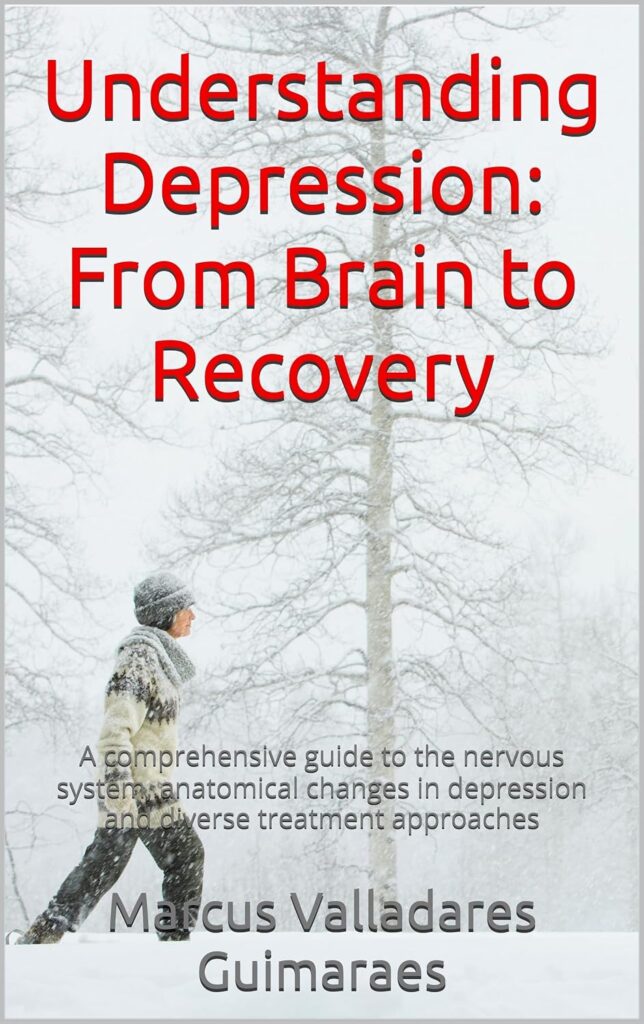
“Understanding Depression: From Brain to Recovery” is an accessible scientific guide that explains depression from neuroanatomy to healing strategies. You will discover how specific brain structures, including the hippocampus, amygdala and prefrontal cortex, are involved in the illness, the different forms of depression and a comprehensive overview of treatments beyond medications. The book dedicates particular attention to physical activity as a neurobiological ally and to Viktor Frankl’s logotherapy for finding meaning in difficulties. Written with clear and rigorous language, it offers practical tools to recognize and address depression, whether for personal experience or to help those you love.
Discover the Complete Guide – Begin Your Journey of Understanding
© 2025 Alice & Marcus Guimarães. All rights reserved.This site is proudly created with WordPress.