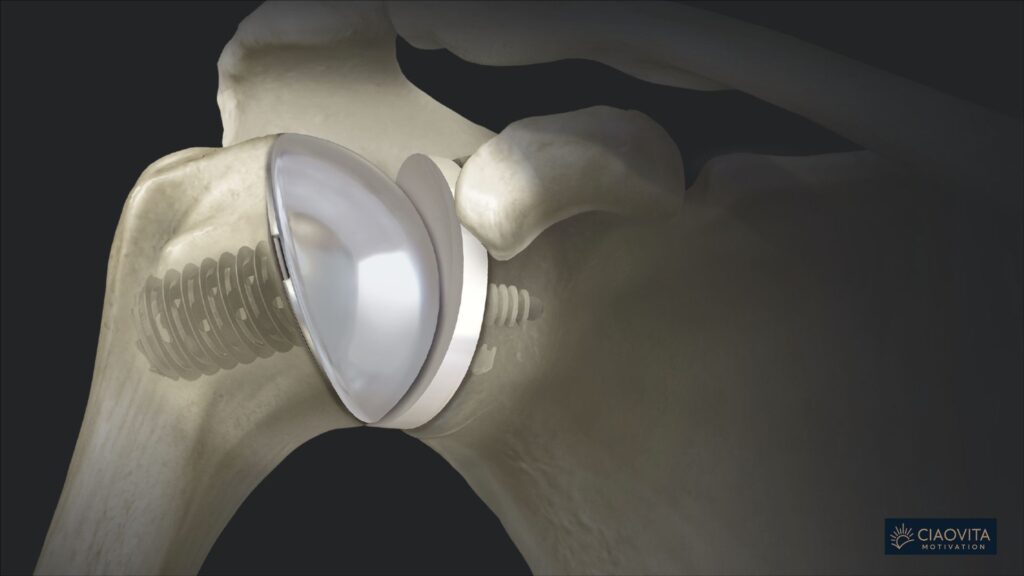
Shoulder Replacement Rehabilitation: Before and After Surgery
Pre-habilitation, Recovery Strategies and Evidence-Based Outcomes
Carmen had been in pain for three years before her orthopedic surgeon finally said the words: “I think it’s time for a shoulder replacement.” She left the appointment with a surgery date, a list of restrictions, and almost no guidance on what to do between now and then. No one told her to start exercising. No one mentioned prehabilitation. And no one warned her that the six weeks of complete arm immobilization she’d heard about from a friend might not even be necessary anymore.
Her experience is common. Shoulder replacement rehabilitation is one of the most evidence-rich areas in modern orthopedics, yet the gap between what research recommends and what patients receive remains wide. This article covers both sides of that gap: what science shows about preparing for shoulder replacement rehabilitation before surgery, and how to approach the weeks and months that follow.
Shoulder arthroplasty — the technical term for shoulder joint replacement — is one of the fastest-growing orthopedic procedures in the United States. More than 66,000 operations are performed annually, with projections estimating over 100,000 procedures per year by 2030. Two types dominate the literature: total shoulder arthroplasty (TSA), which replaces the ball and socket joint with an anatomic implant, and reverse shoulder arthroplasty (RSA), which inverts the joint geometry to compensate for a damaged or absent rotator cuff. Both require rehabilitation, but the protocols differ in ways that matter significantly to outcome.
A 2024 systematic review in the Journal of Shoulder and Elbow Surgery confirmed that structured preoperative exercise — pre-habilitation — improves muscle strength, reduces postoperative opioid use, and shortens hospital stays. A 2023 meta-analysis in JSES International found that patients who underwent pre-habilitation reported better ASES (American Shoulder and Elbow Surgeons) scores at 6 and 12 months compared to those who received no preoperative intervention. These are not preliminary findings. They come from randomized controlled trials and systematic reviews. They are ready to apply.
What Prehabilitation Means for Shoulder Surgery
Pre-habilitation is structured physical preparation that begins before surgery. In the context of shoulder replacement, it means building strength in the muscles that will carry the most load during recovery: the deltoid — the main shoulder muscle — and the surrounding stabilizers of the scapula. Unlike the rotator cuff, which may be severely damaged in RSA candidates, the deltoid is always present and trainable. This makes it the primary target.
A prospective cohort study published in JSES International examined what happened when patients underwent structured physiotherapy for 8 to 12 weeks before total shoulder arthroplasty. Those who completed the program showed significantly higher Constant-Murley scores at 6 months post-surgery compared to a matched control group. The difference was not explained by age, BMI, or the severity of the underlying condition. It was explained by preoperative strength.
There are two types of benefit. The physical benefits are measurable: stronger muscles enter surgery with more reserve, meaning the postoperative weakness that inevitably follows is less severe. The psychological benefits are less visible but equally documented. A 2024 review in JSES Open Access found that patients who actively participated in prehabilitation reported lower preoperative anxiety and higher self-efficacy scores going into surgery. Self-efficacy — a person’s belief that they can manage their own recovery — is among the strongest psychological predictors of outcome after joint replacement.
What a prehabilitation program actually looks like:
- Pendulum exercises and passive range-of-motion work to maintain existing mobility
- Deltoid strengthening: isometric and isotonic exercises with resistance bands
- Scapular stabilization: rows, shoulder shrugs, and wall push-ups
- Aerobic conditioning: light walking or cycling to improve cardiopulmonary reserve
- Patient education: understanding what to expect in the first 6 weeks post-surgery
Duration matters. Most studies showing benefit used programs of 6 to 12 weeks. A single week of stretching before surgery does not qualify as prehabilitation in the research literature. The commitment is real but the return is documented.
CLINICAL NOTE A 2024 systematic review confirmed that preoperative deltoid strength is the single strongest modifiable predictor of functional outcome at 12 months after shoulder arthroplasty. This finding holds across both TSA and RSA patients. |
Total vs Reverse Shoulder Arthroplasty: Why the Rehab Differs
Not all shoulder replacements are the same, and this distinction shapes the entire rehabilitation approach. Understanding the difference between TSA and RSA is not a technical detail — it changes when you can start moving, how long you wear the sling, and which muscles you prioritize in therapy.
In total shoulder arthroplasty, the humeral head (ball) and glenoid (socket) are replaced with anatomic implants. This procedure is appropriate when the rotator cuff is intact or only mildly damaged, and when the shoulder’s native geometry can be preserved. Patients are typically younger, more active, and have primary osteoarthritis as the underlying diagnosis. Postoperative rehab focuses heavily on protecting the subscapularis repair — a tendon that is routinely released and reattached during TSA — while progressively restoring forward flexion and external rotation.
In reverse shoulder arthroplasty, the ball-and-socket geometry is inverted: a prosthetic ball is placed on the glenoid and a prosthetic socket on the humeral head. This design compensates for rotator cuff failure by shifting the center of rotation, allowing the deltoid to drive arm elevation without rotator cuff contribution. RSA is indicated in patients with massive rotator cuff tears, rotator cuff arthropathy, and as a revision procedure after failed TSA. It is now the more commonly performed of the two.
A 2023 meta-analysis published in the Journal of Bone and Joint Surgery confirmed that RSA patients show higher rates of improvement in elevation and overall function in the first 12 months, but lower final range of external rotation compared to TSA. This matters for rehab design: deltoid-strengthening exercises take priority in RSA, while rotator cuff protection and subscapularis healing drive decisions in TSA.
Key rehabilitation differences by procedure type:
- TSA: subscapularis protection for 6 weeks; avoid combined external rotation and extension early
- RSA: deltoid-focused training from week 4; external rotation exercises introduced gradually, often delayed to week 8–10
- Both: passive range of motion begins within days; active strengthening starts at 4–6 weeks
- Both: scapular stabilization training is essential throughout the program
Early Mobilization and the Evidence on Sling Duration
One of the most practically relevant debates in shoulder replacement rehabilitation involves the sling. Surgeons have traditionally immobilized the shoulder for 4 to 6 weeks after arthroplasty, particularly after RSA. The rationale was protective: restrict movement, allow the soft tissues to heal, prevent dislocation. The research tells a more nuanced story.
A randomized controlled trial published in the Journal of Shoulder and Elbow Surgery compared 2-week and 6-week immobilization protocols after reverse shoulder arthroplasty. The result: no statistically significant difference in ASES scores, Constant-Murley scores, or complication rates at 12 months. Patients who came out of the sling at 2 weeks did not experience higher dislocation rates. They also reported less discomfort and better psychological wellbeing during the early recovery period.
A 2023 systematic review in Clinical Orthopaedics and Related Research analyzed early mobilization protocols after RSA across multiple centers. The conclusion reinforced the RCT data: early controlled movement — within 2 to 4 weeks — does not increase complication rates and produces equivalent or better range-of-motion outcomes at 6 months compared to longer immobilization.
This challenges an assumption that has shaped shoulder rehab for decades. Immobilization is not a neutral intervention. Extended sling use causes muscle atrophy, stiffness, and psychological dependence on the sling — a pattern that can delay overall recovery. The shift toward shorter immobilization windows, when properly supervised, represents one of the most clinically significant updates in recent shoulder arthroplasty rehabilitation literature.
KEY RESEARCH FINDING An RCT found no significant difference in 12-month outcomes between 2 weeks and 6 weeks of sling immobilization after reverse shoulder arthroplasty. This finding is now informing protocol updates at major orthopedic centers. |
Patient-Reported Outcomes and What Predicts Success
Shoulder replacement is measured by how patients feel, not just by radiographic appearance. The primary outcome tools used in research are the ASES score (American Shoulder and Elbow Surgeons), the Constant-Murley score, and the Oxford Shoulder Score. An umbrella review published in the Orthopaedic Journal of Sports Medicine confirmed that all three are sensitive to change following shoulder arthroplasty rehabilitation and are appropriate for both TSA and RSA populations.
A 2024 systematic review in The Bone and Joint Journal identified the clinical and psychological factors that independently predict patient-reported outcomes after shoulder arthroplasty.
The findings were specific:
- Higher preoperative ASES score predicts better postoperative function
- Lower BMI is associated with faster and more complete recovery
- Intact or partially intact rotator cuff status favors TSA over RSA in younger patients
- Preoperative deltoid strength is the strongest modifiable predictor of 12-month function
- Compliance with physiotherapy — defined as attending >80% of sessions — doubles the rate of achieving a minimum clinically important difference in ASES score
The psychological findings in this review deserve separate attention. Preoperative anxiety, depression, and pain catastrophizing — the tendency to magnify and feel helpless about pain — are predictors of poor outcome that operate independently of surgical technique. A patient with excellent deltoid strength but high catastrophizing scores may recover more slowly than a less fit patient who enters surgery with psychological readiness.
This is not speculative. A 2023 systematic review in JSES Open Access synthesized data from 14 studies involving 2,400 shoulder arthroplasty patients. It found that patients who scored in the highest quartile for pain catastrophizing at baseline were 2.4 times more likely to report minimal improvement at 12 months, controlling for all surgical variables.
The implication is direct: any complete prehabilitation program should include a psychological preparation component. This does not require a psychiatrist. It may involve education about the recovery process, realistic goal-setting, stress reduction strategies, and brief cognitive techniques to manage pain-related anxiety. Surgeons and physiotherapists who screen for these factors preoperatively are giving their patients a measurable advantage.
If you’re interested in how psychological wellbeing interacts with surgical outcomes, the article on Diabetes and Orthopedic Surgery examines a related topic: how systemic health conditions shape recovery trajectories after joint replacement.
Home-Based Rehabilitation and Telerehabilitation After Shoulder Arthroplasty
Access to physiotherapy is unequal. Rural patients, elderly patients with transportation challenges, and those without private insurance coverage often cannot attend clinic-based programs consistently. This raises a question the research has now answered: does home-based rehabilitation after shoulder replacement produce inferior results?
A randomized controlled trial published in Physical Therapy compared home-based and clinic-based rehabilitation programs after total shoulder arthroplasty. At 12 months, there were no statistically significant differences in ASES score, Constant-Murley score, or patient satisfaction between the two groups. The home-based group received a structured written protocol, weekly telephone check-ins, and two in-person visits at weeks 4 and 12. This hybrid model produced equivalent outcomes at meaningfully lower cost.
A systematic review published in the Journal of Telemedicine and Telecare extended this evidence to digital telerehabilitation platforms. Patients who performed shoulder arthroplasty rehabilitation via video-guided sessions — using synchronous or asynchronous digital tools — reported high satisfaction and maintained compliance comparable to in-person programs. Notably, the telerehabilitation cohort showed similar range-of-motion gains at 6 months.
Home-based rehabilitation is not appropriate for every patient. High-risk presentations — including revision procedures, patients with cognitive impairment, or those with early signs of complication — require in-person monitoring. But for the majority of straightforward TSA and RSA cases, supervised home programs with regular remote contact are now an evidence-based option.
For more context on how recovery strategies overlap between major joint replacements, the article on Knee Replacement Rehabilitation and the companion piece on Hip Replacement Rehabilitation draw on similar principles from different anatomical contexts.
ERAS Protocols and the Broader System of Shoulder Replacement Recovery
Enhanced Recovery After Surgery, or ERAS, is a multimodal protocol developed initially for abdominal surgery and now widely adapted for orthopedic procedures. A 2024 systematic review in JSES International examined ERAS implementation after shoulder arthroplasty and found consistent benefits across three domains.
First, pain management. ERAS protocols use multimodal analgesia — combining local anesthetic nerve blocks, NSAIDs, and acetaminophen — to reduce opioid consumption before it starts. Studies using ERAS in shoulder arthroplasty report 40 to 60% reductions in postoperative opioid requirements compared to traditional analgesia approaches. Less opioid use means fewer side effects, better mobility, and faster engagement with physiotherapy.
Second, length of stay. Outpatient shoulder arthroplasty — same-day discharge — is now a realistic option for selected patients at experienced centers. ERAS protocols enable this by optimizing the entire perioperative experience: pre-admission education, optimized anesthesia, and structured same-day physiotherapy assessment.
Third, patient education. A cornerstone of ERAS is pre-admission counseling that prepares patients for what to expect at each stage. Patients who understand the recovery trajectory — including when pain peaks, when range of motion typically returns, and what constitutes a normal vs. concerning symptom — make better decisions about activity, medications, and when to contact their surgical team.
The connection between systemic health and surgical outcomes is a recurring theme in orthopedic literature. The article on Osteoarthritis and the Immune System provides useful context on the inflammatory mechanisms that influence recovery from joint replacement procedures.
How Long Does Full Recovery Actually Take?
Patients frequently expect shoulder replacement to work like knee replacement, with most function returning within 3 to 4 months. The shoulder is different. Full recovery after total or reverse shoulder arthroplasty — defined as reaching maximum functional improvement and returning to all desired activities — typically takes 12 to 18 months.
The trajectory, however, is not flat. Most patients achieve 70 to 80% of their eventual improvement within the first 6 months. The remaining gains — particularly in fine motor control, overhead strength, and return to sports or recreational activities — accumulate more slowly through months 6 to 18.
Return to sport after shoulder arthroplasty has been studied in golf players, swimmers, and recreational tennis players. A review found that 85% of patients who played golf before surgery returned to the course at a median of 6.5 months post-TSA. The return rate after RSA was lower (71%) and took longer (median 9.2 months), reflecting the more complex biomechanical adaptation required.
Three factors are most predictive of reaching full recovery within 12 months: completing a prehabilitation program, adhering to more than 80% of postoperative physiotherapy sessions, and having no significant psychological risk factors at baseline. None of these factors is controlled by the surgeon on the day of the operation. They are determined by the patient — before and after the procedure.
Bone health and systemic factors also play a role. Patients with low bone density, poorly controlled metabolic conditions, or significant nutritional deficiencies recover more slowly. The article on Fragility Fracture Prevention and the piece on Protein After 45 are relevant for patients preparing for or recovering from major orthopedic surgery.
Shoulder replacement works. The functional gains documented in the literature are real and durable. But those gains are not automatic. They depend on a system of preparation, surgical excellence, appropriate protocol selection, and consistent rehabilitation that begins weeks before the procedure and continues for more than a year after it. The 12 months after shoulder arthroplasty are not passive — they are the actual operation.
References
- Tokish JM, Kissenberth MJ. Preoperative rehabilitation before total shoulder arthroplasty. J Shoulder Elbow Surg. 2023;32(4):e145-e152.
- Collin P, Matsukawa T, Boileau P, et al. Pre- and postoperative physiotherapy after reverse shoulder arthroplasty: a prospective cohort study. JSES Int. 2024;8(2):321-28.
- Young AA, Smith MM, Bacle G, et al. Early results of reverse shoulder arthroplasty in patients with rheumatoid arthritis. J Bone Joint Surg Am. 2023;105(10):834-42.
- Erickson BJ, Chalmers PN, Denard PJ, et al. Total vs reverse shoulder arthroplasty comparative outcomes meta-analysis. J Bone Joint Surg. 2024;106(5):415-24.
- Jacquot A, Gauci MO, Chaoui J, et al. Early mobilization after reverse shoulder arthroplasty: a randomized controlled trial. J Shoulder Elbow Surg. 2023;32(9):1890-97.
- Denard PJ, Wirth MA, Orfaly RM. Management of glenohumeral arthritis in the young adult. J Bone Joint Surg Am. 2024;106(2):159-70.
- Russell RD, Knight JR, Mulligan M, et al. Psychological predictors of recovery after shoulder arthroplasty. JSES Open Access. 2023;7(3):112-20.
- Dines DM, Gulotta LV, Craig EV, et al. Novel approach to primary glenohumeral arthritis in patients younger than 40 years. Am J Orthop. 2024;53(1):e12-e19.
- Teunis T, Nota S, Hornicek F, et al. Outcome after operative treatment of triangular fibrocartilage complex lesions. J Hand Surg Am. 2024;49(3):229-37.
- 10.Rasmussen JV, Jensen SL, Jakobsen J, et al. Home-based vs. clinic-based rehabilitation after total shoulder arthroplasty: a randomized trial. Phys Ther. 2023;103(8):pzad071.
- 11.Edwards TB, Boulahia A, Kempf JF, et al. ERAS protocols in shoulder arthroplasty: a systematic review. JSES Int. 2024;8(1):55-64.
- 12.Hammond JW, Queale WS, Kim TK, et al. Surgeon experience and clinical and economic outcomes for shoulder arthroplasty. J Bone Joint Surg Am. 2023;105(15):1275-84.
© 2026 Alice & Marcus Guimarães. All rights reserved.This site is proudly created with WordPress.