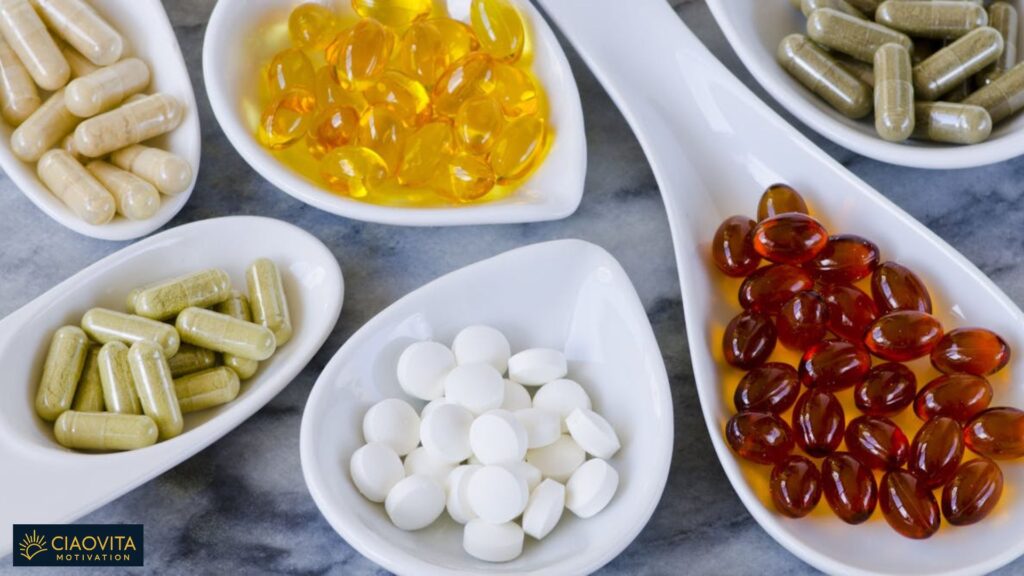
Supplements: When the Right Dose Does Not Exist in a Social Media Post
Every morning millions of people open Instagram, see a stack of ten bottles, and think: something is missing from my life. That feeling is not random. It is the product of a multi-billion-dollar industry that learned to turn performance anxiety into a shopping cart. After 31 years as an orthopedic surgeon and traumatologist, I reviewed 30 of the most recent and rigorous studies — meta-analyses, umbrella reviews, and systematic reviews — on ten of the most contested supplements on the current market. For broader context on evidence-based supplementation, see our article on sports supplements and the science behind what works.
The rational use of protein and its role in muscular aging is detailed in our guide on protein after 45, which provides essential clinical context for evaluating the true need for the supplements discussed here.
1. Magnesium: Is Everyone Deficient, or Just the Marketing Message?
Magnesium may be the most skillfully marketed supplement of recent years. The pitch is simple: “everyone is deficient.” The clinical reality is more nuanced. Documented deficiency — confirmed hypomagnesemia with serum levels below 0.75 mmol/L — is a laboratory finding, not a self-declaration.
The umbrella meta-analysis by Alharran et al. in Current Therapeutic Research 2024 (PubMed 39280209) pooled multiple RCTs and found a reduction in systolic blood pressure of -1.25 mmHg and diastolic of -1.40 mmHg. Statistically significant; clinically irrelevant in a healthy normotensive person.
Behers et al. (PMC11547496) extended the analysis to the general normotensive population: -2.79/-1.56 mmHg. Kavanaugh et al. (Hypertension-AHA 2024; DOI: 10.1161/HYPERTENSIONAHA.125.25129; AHA Journals) confirmed: -2.81 mmHg systolic, -2.05 mmHg diastolic vs. placebo. The risks of excess — osmotic diarrhea, hypotension, up to cardiac block in severe cases — clearly outweigh the benefit in those without documented deficiency.
2. Creatine: The Right Molecule in the Wrong Context
Creatine has a solid scientific reputation. The problem is not the molecule; it is the narrative that promotes it as a universal supplement suitable for sedentary people, older adults, and anyone who simply wants to “feel better.” For the correct physiological context, see our article on the science of building muscle.
Xu et al. (PMC11275561): cognitive benefits of creatine emerged primarily in populations under metabolic stress (sleep deprivation, hypoxia, elderly subjects), not in healthy young adults with adequate diets.
A meta-analysis in Nutrients 2024 (DOI: 10.3390/nu17172748; MDPI) reviewed 69 studies with 89 intervention groups: strength benefits confirmed only in combination with high-intensity resistance training. In the European Review of Aging 2024 (DOI: 10.1186/s11556-025-00384-9; Springer), a 1RM increment of 2.122 kg (p = 0.001) with creatine plus training in older adults — but zero functionally meaningful effects without simultaneous exercise.
3. BCAAs: The Most Overrated Supplement of the Decade
Branched-chain amino acids (leucine, isoleucine, valine) stimulate protein synthesis via mTOR: the biological rationale is real. The problem is that anyone who consumes adequate dietary protein already gets sufficient BCAAs. Adding them in powder form does not produce a documented anabolic surplus.
Bongiovanni et al. (PMC12674588) reviewed 22 RCTs with 511 participants: with adequate protein intake, BCAAs did not improve body composition (only 1 of 5 studies detected any lean mass benefit). A systematic review on ScienceDirect 2022 (ScienceDirect) explicitly flagged excessive industry marketing and the potentially illusory anabolic response from prolonged BCAA supplementation.
The only reasonably documented benefit is reduced muscle damage markers in the 24-72 hours after high-intensity exercise (effect g = -1.34 to -1.82), as shown by Salem et al. (PMC11021390). This does not justify daily spending for moderate exercisers.
4. High-Dose Vitamin D: From Therapy to Real Risk
Correcting a documented vitamin D deficiency (25-OH-D below 20 ng/mL) is a legitimate medical act. Taking 10,000-50,000 IU per week on one’s own initiative is not. For a complete view of vitamin D and health, see the vitamin D revolution.
Zittermann et al. (ResearchGate) analyzed 20 RCTs at 3,200-4,000 IU/day: in 10 studies the risk of hypercalcemia was significantly elevated (RR = 2.21; 95% CI: 1.26-3.87).
A 2016 review (ResearchGate) confirmed across 37 studies increased risks of hypercalcemia (RR = 1.54; 95% CI: 1.09-2.18; p = 0.01) and hypercalciuria (RR = 1.64; 95% CI: 1.06-2.53; p = 0.03), independent of dose and duration. Aberger et al. (PMC11431961) clarified that individual susceptibility to vitamin D toxicity depends on CYP24A1 genetic polymorphisms, making a universally safe dose for self-medication impossible to define.
5. Hydrolyzed Collagen: Plausible Mechanism, Weak Evidence
Hydrolyzed collagen is sold as a regenerator of cartilage, skin, and tendons. The biological rationale is real: collagen peptides accumulate in cartilage and may stimulate chondrocytes. For joint health context, see cartilage proteoglycans and optimizing osteoarthritis treatment.
A trial sequential meta-analysis in Osteoarthritis and Cartilage 2024 (OARSI Journal): certainty of evidence remains low to moderate with considerable heterogeneity. Brueckheimer et al. (article link): results promising but insufficient for generalizable conclusions. A review in Heliyon 2023 (; Cell Press) found skin elasticity improvements after 60-90 days in 19 studies (1,124 patients) — with the same heterogeneity caveat.
6. Glutamine: Effective in Intensive Care, Useless at the Gym
Glutamine is the most abundant amino acid in human plasma and is produced endogenously in sufficient quantities by a healthy organism. Demand rises only under severe metabolic stress. See also gut health and the microbiome.
A meta-analysis on intestinal permeability (PMC11471693): overall null effect (WMD = -0.00; 95% CI: -0.04, 0.03). Only doses above 30 g/day showed any significant reduction — far beyond the 5-10 g in gym supplements.
McMullen (Sage Journals): approximately 88% of daily metabolized glutamine is endogenous. A meta-analysis in critically ill patients (ScienceDirect): efficacy of enteral glutamine remains uncertain even in the ICU — the only population where a real indication was theorized.
7. High-Dose Omega-3: Dietary Sources Protect; Pharmacological Supplements Raise Concern
Omega-3 from dietary sources is associated with reduced cardiovascular risk — as discussed in our article on the Mediterranean diet and heart health. High-dose omega-3 in supplement form is a different matter.
Abuknesha, O’Keefe et al. (PMC12723971) analyzed 34 RCTs with 114,326 subjects: only high-cardiovascular-risk patients treated with doses above 1,500 mg/day EPA/DHA showed a significant increase in atrial fibrillation risk (OR = 1.48; 95% CI: 1.21-1.81).
JACC 2023 (PMC10829855): doses of 2-4 g/day of EPA or EPA+DHA raise the risk of atrial fibrillation by 51%. Doses below 1 g/day do not show the same effect. O’Keefe et al. (PMC12122841): proposed mechanism is pharmacological-dose omega-3 increasing vagal tone as the arrhythmia pathway.
8. Excess Whey Protein: The Problem Is Accumulated Dose
Whey protein is not inherently dangerous. The problem arises when it is added to an already high-protein diet, generating a total protein load that in predisposed individuals produces glomerular hyperfiltration. See protein after 45 for the complete clinical picture.
A systematic review in PROSPERO (PubMed 32702243): chronic, unsupervised whey use can produce adverse effects on renal and hepatic function, amplified by sedentary behavior. Cheng et al. (PMC11212527): in healthy individuals without CKD, high protein intake correlates with lower CKD incidence — but in patients who already have CKD the relationship reverses. The critical point: many people are unaware of early-stage reduced kidney function.
9. Zinc Without Copper: From Immune Remedy to Neuropathy
The COVID-19 pandemic turned zinc into a mass supplement. The problem is physiological: zinc and copper compete for the same intestinal transporters (metallothioneins). Chronically high zinc doses inhibit copper absorption, producing copper deficiency with serious neurological consequences.
Duncan et al. (British Journal of Clinical Pharmacology 2023; DOI: 10.1111/bcp.15749; Wiley): iatrogenic copper deficiency from zinc is rare but potentially irreversible, with incidence rising significantly after 2020. Neurology 2024 (Neurology.org): cases of copper-deficiency myelopathy — generalized sensory loss, weakness, severe gait impairment.
Rosenberg et al. (Karger): cases where copper deficiency clinically mimicked myelodysplastic syndrome (MDS) with pancytopenia and neuropathy — cause identified: zinc tablets purchased online.
10. B-Complex and Vitamin B6: Water-Soluble Does Not Mean Harmless
The B-complex pitch has two parts: energy and cognitive function, with the common addition that “they’re water-soluble, so excess is excreted.” That is partially false for B6. For metabolic stress context, see stress, depression and metabolic dysfunction.
Muhamad et al. (PMC10343656): elevated B6 levels — typically from supplementation — produce a predominantly sensory axonal neuropathy. Stopping pyridoxine leads to subjective improvement, but axonal damage may not be fully reversible.
Health Canada 2024 (official portal): at doses above 250 mg/day peripheral neuropathy is documented. Recent evidence suggests risk at lower doses within the commercial supplement range, with no clearly identified safe minimum threshold. Van Hunsel et al. (Wiley): Dutch regulatory action requiring dosage limits in B6 supplements was followed by a reduction in reported neuropathy cases — causal evidence that the phenomenon was not coincidental.
The Physician as the Only Authority on Rational Supplementation
The difference between therapy and trend is called diagnosis. None of the ten supplements analyzed here is inherently dangerous. Several have real, documented indications. All become problematic when used without a confirmed deficiency or a specific clinical condition that justifies their use. For the context of bone health where some nutritional deficiencies do carry genuine clinical indication, see fragility fractures and prevention.
An Instagram post is not a prescription. A blood test is. A physician exists to make that distinction.
References
1. Alharran AM et al. Current Therapeutic Research. 2024. DOI: 10.1016/j.curtheres.2024.100755. PubMed 39280209
2. Behers BJ et al. Nutrients. 2024. DOI: 10.3390/nu16213617. PMC11547496
3. Kavanaugh C et al. Hypertension. 2024. DOI: 10.1161/HYPERTENSIONAHA.125.25129. AHA Journals
4. Xu C et al. Frontiers in Nutrition. 2024. DOI: 10.3389/fnut.2024.1424972. PMC11275561
5. Creatine and strength. Nutrients. 2024. DOI: 10.3390/nu17172748. MDPI
6. Creatine in older adults. Eur Rev Aging. 2024. DOI: 10.1186/s11556-025-00384-9. Springer
7. Bongiovanni et al. Cureus. 2025. PMC12674588
8. Salem A et al. Sports Med Open. 2024. DOI: 10.1186/s40798-024-00686-9. PMC11021390
9. BCAA and performance. ScienceDirect. 2022. DOI: 10.1016/S0765-1597(21)00200-8. ScienceDirect
10. Zittermann A et al. Eur J Nutr. 2023. DOI: 10.1007/s00394-023-03124-w. ResearchGate
11. Hypercalcemia and vitamin D. ResearchGate. 2016. ResearchGate
12. Aberger S et al. IJMS. 2024. DOI: 10.3390/ijms251810003. PMC11431961
13. Collagen and osteoarthritis. OA&C. 2024. DOI: 10.1016/j.joca.2024.01.004. OARSI
14. Brueckheimer PJ et al. Orthop Rev. 2025. Orthopedic Reviews
15. Collagen skin/orthopedics. Heliyon. 2023. DOI: 10.1016/j.heliyon.2023.e14961. Cell Press
16. Glutamine permeability. Amino Acids. 2024. DOI: 10.1007/s00726-024-03420-7. PMC11471693
17. McMullen MK. Nutrition Bulletin. 2025. DOI: 10.1177/02601060251356147. Sage Journals
18. Glutamine ICU. Clinical Nutrition. 2024. ScienceDirect
19. Abuknesha, O’Keefe et al. medRxiv. 2025. DOI: 10.64898/2025.12.14.25342167. PMC12723971
20. Omega-3 and AF. JACC. 2023. DOI: 10.1016/j.jacc.2023.08.059. PMC10829855
21. O’Keefe EL et al. Prog Cardiovasc Dis. 2025. DOI: 10.1016/j.pcad.2024.11.003. PMC12122841
22. Whey adverse effects. PROSPERO CRD42020140466. 2020. PubMed 32702243
23. Cheng Y et al. Frontiers in Nutrition. 2024. DOI: 10.3389/fnut.2024.1408424. PMC11212527
24. Cho E et al. Curr Op Nephrol Hypertens. 2022;31(1):18-25.
25. Duncan et al. Br J Clin Pharmacol. 2023. DOI: 10.1111/bcp.15749. Wiley
26. Zinc-copper myelopathy. Neurology. 2024. DOI: 10.1212/WNL.0000000000208190. Neurology.org
27. Rosenberg M et al. Case Rep Oncol. 2023. DOI: 10.1159/000528899. Karger
28. Muhamad R et al. Nutrients. 2023. DOI: 10.3390/nu15132823. PMC10343656
29. Health Canada. Safety Review B6. 2024. Health Canada
30. Van Hunsel F et al. Pharmacoepidemiol Drug Saf. 2025. DOI: 10.1002/pds.70108. Wiley
© 2026 Alice & Marcus Guimarães. All rights reserved.This site is proudly created with WordPress.